
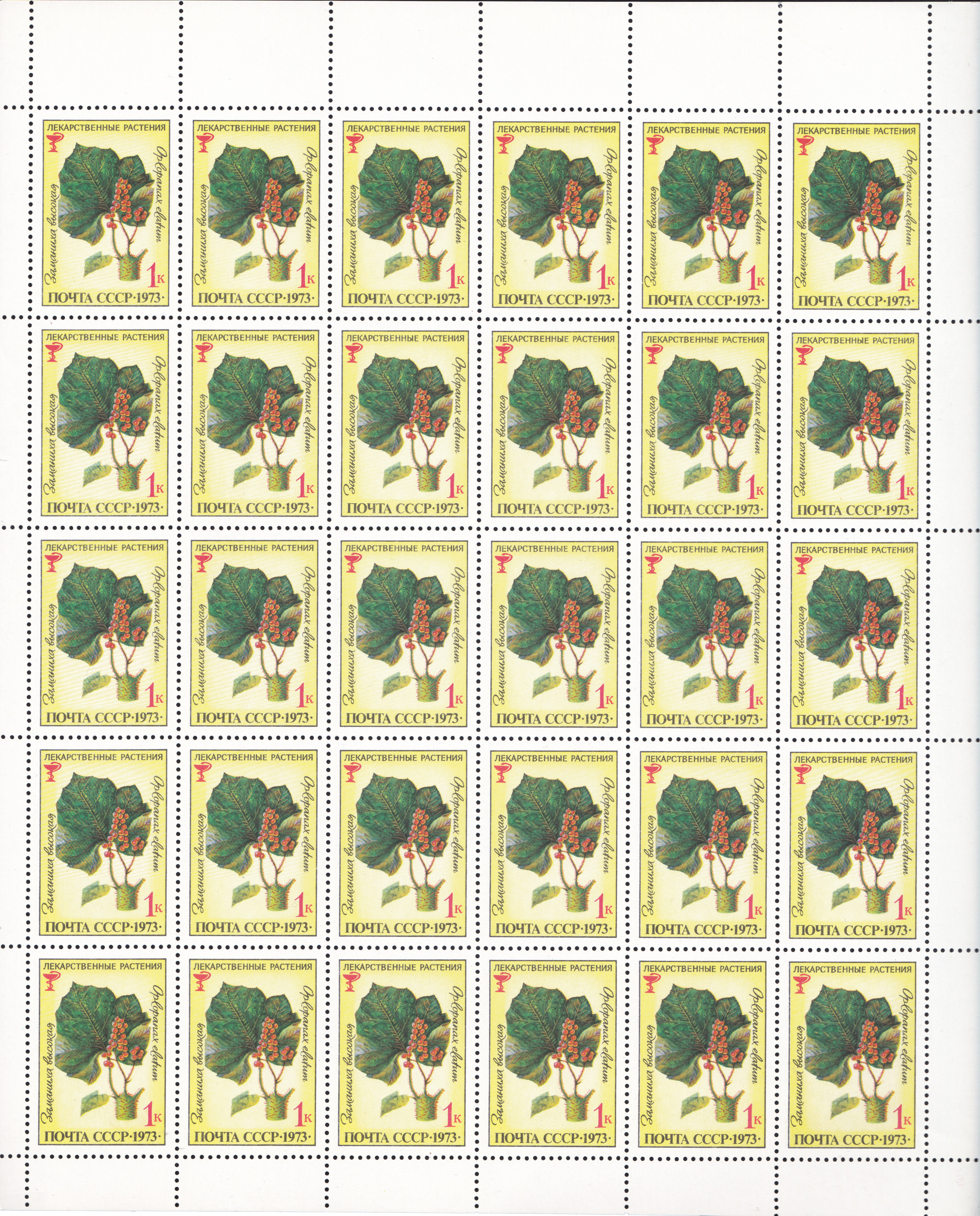
The stamp “Oplopanax elatus” from the “Medicinal Plants” series was issued on September 5, 1973. Print run: 5,700,000 copies. Artist: N. Shevtsov.
Oplopanax elatus lives for more than 300 years and is a relict of the Russian Far East.
The root and rhizomes are used to prepare medicines. They contain more than 120 biologically active compounds: saponins, flavonoids, anthraquinones, phenolic and organic acids, oligosaccharides, sterols and their glycosides, anthraquinones, polyacetylenes, alcohols, and aldehydes. An alcohol tincture is made from the underground parts of Oplopanax elatus; since 1955, the national pharmacopoeia has officially recognized it as a tonic and a remedy for mild diabetes. Essential oil is also used (volatile substances are extracted from the roots by steam distillation). Aqueous decoctions and infusions are less effective, although people with diabetes drink tea made from the inner bark of the roots.
Uncontrolled harvesting, annual forest fires, and the reduction of forest area have led to the species being listed in the Red Data Book of the Russian Federation. It is now protected in several nature reserves in Primorye.