
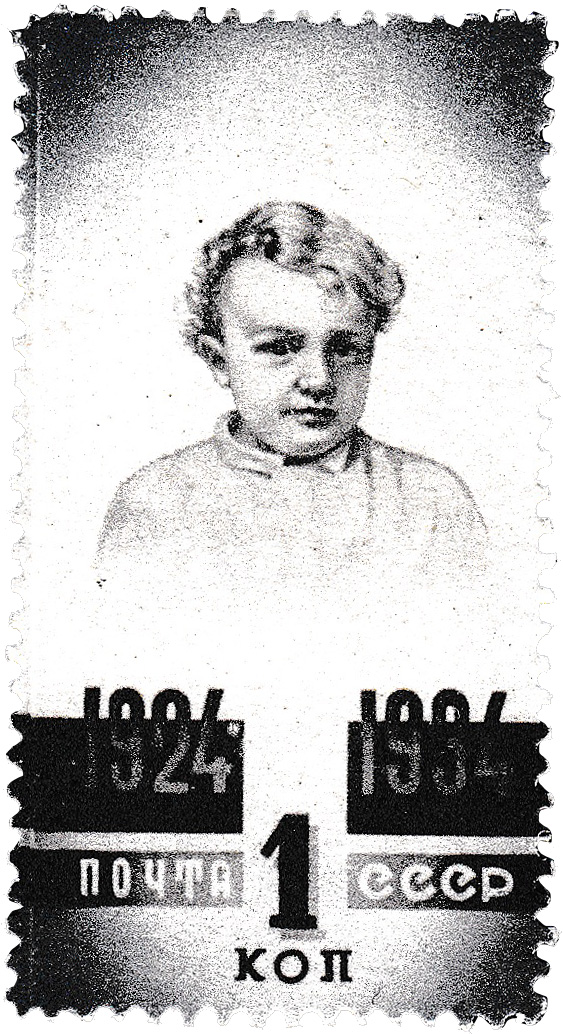
A stamp featuring a portrait of V. I. Lenin as a child, from the 2nd issue of the 11-year series “10th Anniversary of the Death of V. I. Lenin,” was released in November 1934. Print run: 200,000 copies. Artists: I. Borov, G. Zamskoy, I. Ganf.
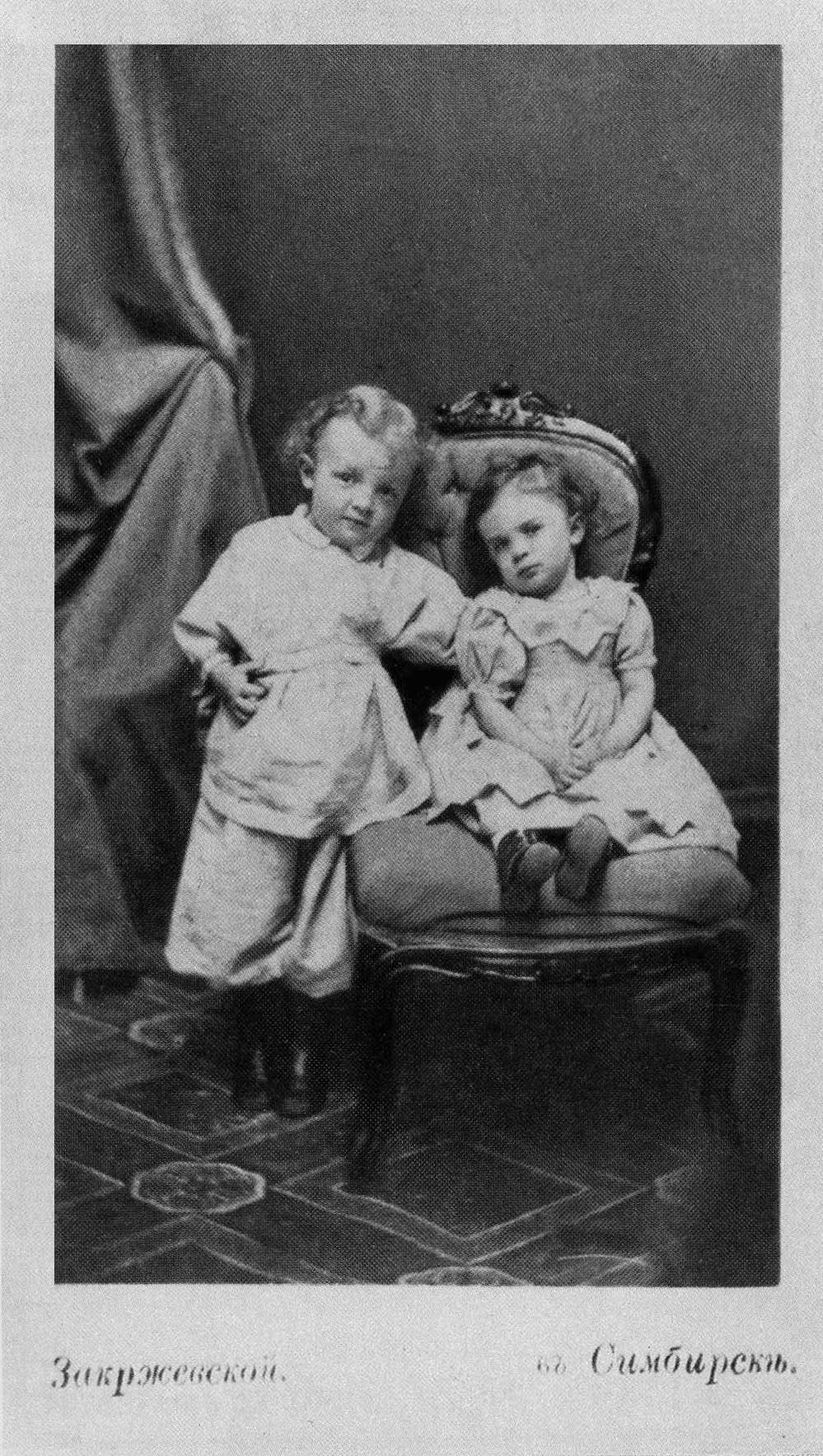
The portrait for the stamp was taken from a photograph by Ekaterina Lvovna Zakrzhevskaya, made in 1874 in the city of Simbirsk, showing little Volodya Ulyanov at the age of 4 together with his sister Olga.
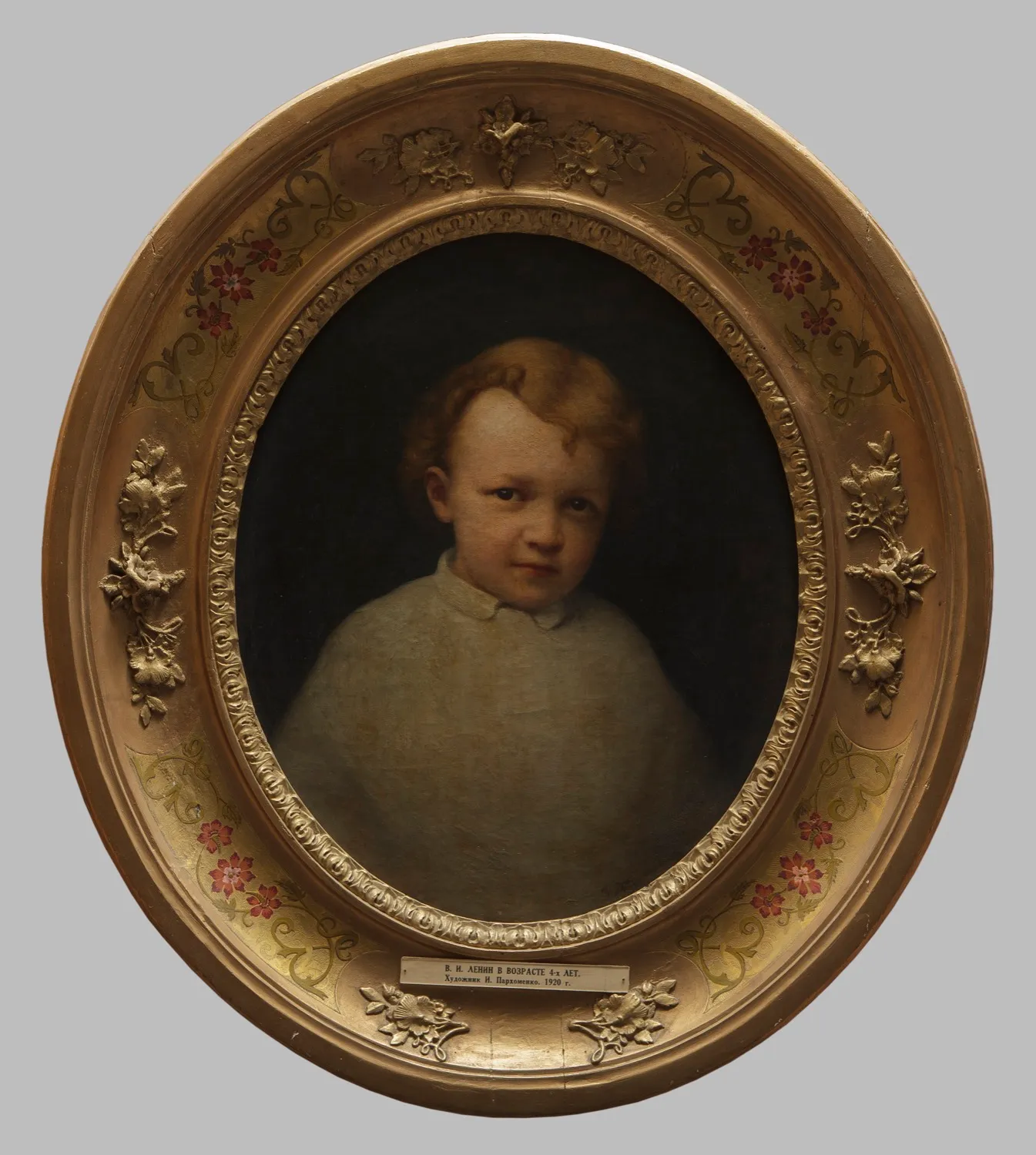
In 1920, Ivan Kirillovich Parkhomenko painted his first portrait of V. I. Lenin based on this photograph, “V. I. Lenin at the Age of 4.” The portrait was painted as a gift to the leader for another anniversary of the October Revolution. The author was unable to present the gift to Lenin personally and handed it over to N. K. Krupskaya.
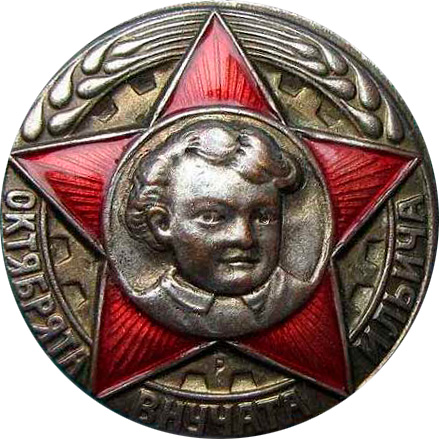
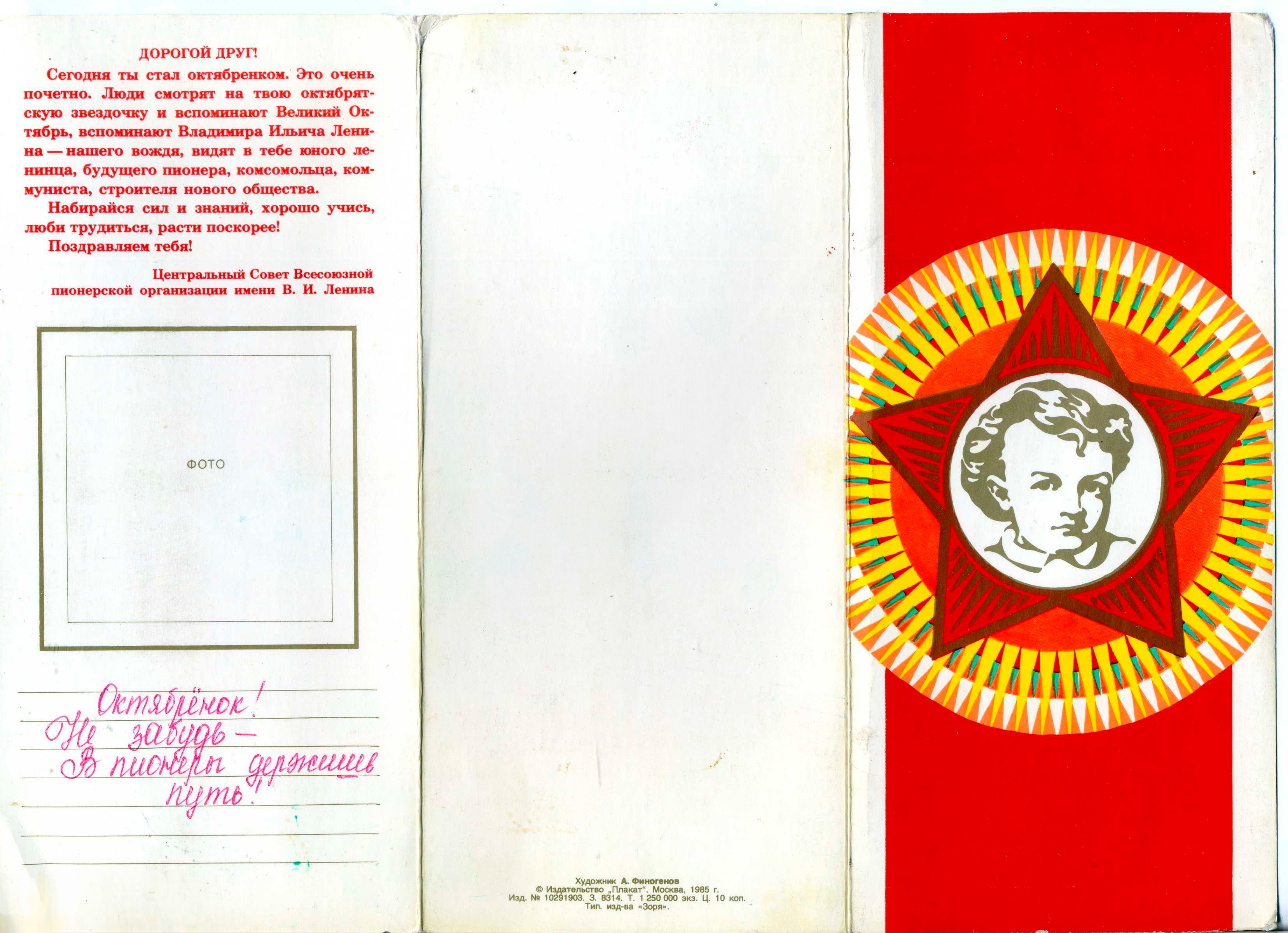
In 1926, this image was used in the creation of the “Oktyabryonok” badge.
During the Soviet era, there were many meaningful, seemingly simple things that people of that time took pride in. The country had many attributes that helped educate young people from a very early age. The leadership of the Soviet Union implemented a step-by-step development of the Soviet person’s consciousness.
The very first award attribute for small children was the Oktyabryonok badge. It was worn on the school uniform. A red star with yellow edges indicated that the child was associated with the Communist Party. This badge was awarded for exemplary behavior and good academic performance.
The term “Oktyabryata” emerged in 1923–1924, when the first groups of children began to be formed in Moscow; these groups admitted boys and girls who were peers of the Great October Socialist Revolution.
In 1924, among the state measures to perpetuate the memory of V. I. Lenin in the RSFSR, the V. I. Lenin Fund was established to organize ongoing assistance to homeless children. The VTsIK commission responsible for organizing and managing this fund was headed by M. I. Kalinin.
By a special resolution of the VTsIK and the Council of People’s Commissars, the Soviet Philatelic Association (SFA) was placed directly under this commission. The SFA’s revenues from the sale of Soviet stamps domestically and abroad were directed to the V. I. Lenin Fund.
On the initiative of M. I. Kalinin, the People’s Commissariat of Posts and Telegraphs began issuing a series of postal-charity stamps, “For the Benefit of Homeless Children,” at the end of 1926. Part of the face value of the stamps went to the V. I. Lenin Fund. Oversight of their artistic design was carried out by the VTsIK Children’s Commission.
In January 1927, a blue stamp from the same series, “V. I. Lenin as a Child,” with a face value of 20 kopeks, was issued, featuring the same portrait of four-year-old Volodya Ulyanov. The stamp was released with a delay. It had been planned that both stamps in the series would depict Soviet children. Everything went smoothly, but only after the print run was ready did an unsightly detail come to light. The 20-kopeck stamp showed not a generalized image of a child, but a very specific portrait—the son of one of the senior officials of the Children’s Commission. The release of the series into postal circulation was postponed, and the “caring” father was dismissed from work in the Children’s Commission. Since the idea of depicting a specific child had arisen, Mikhail Ivanovich Kalinin proposed a достойный way out. On the new stamp of the series, the portrait of four-year-old Volodya Ulyanov (from the photograph by E. Zakrzhevskaya) was reproduced for the first time.
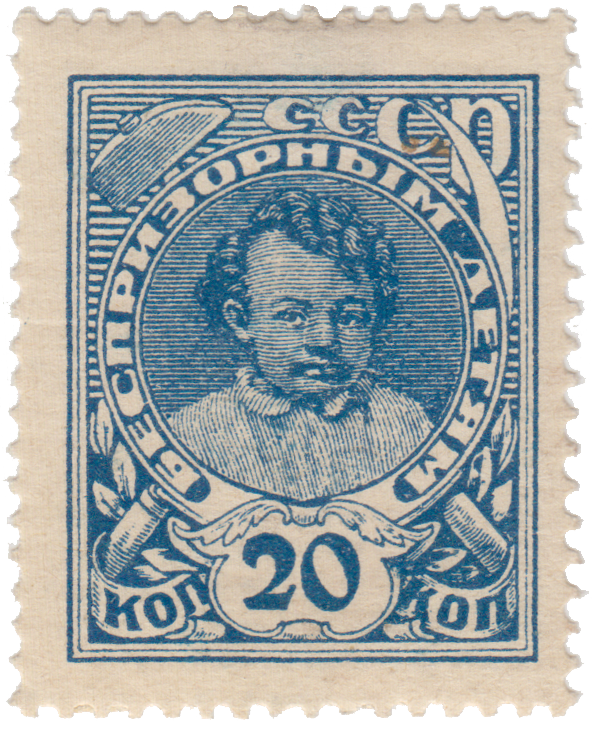
In April 1927, this stamp was issued in a modified color (carmine-pink), now with the postal fee and the surcharge for the V. I. Lenin Fund to aid homeless children shown separately (18 k. + 2 k.).