
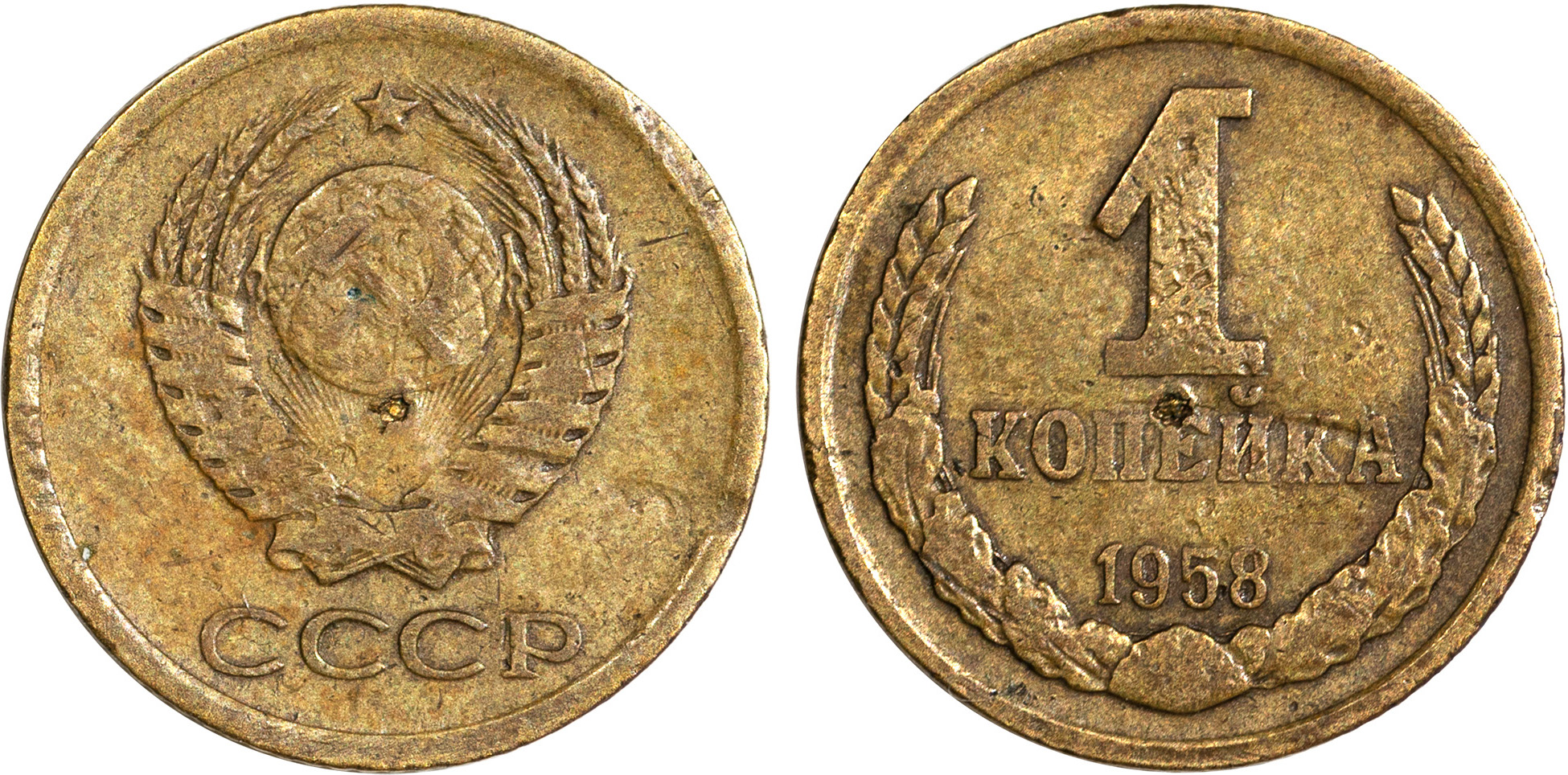
These coins were a harbinger of the reform being prepared for 1961. The lower denominations in this group have the same design as the post-reform coins. The main difference from later issues is the presence of large denominations of 1, 2, and 5 rubles. The 1958 coins never entered circulation, and almost the entire mintage was destroyed. Therefore, all 1958 coins are a numismatic rarity and are highly valuable.
24 February — the USSR Council of Ministers issues the resolution “On the minting of metal coins of a new denomination and coins from a new alloy.” It approved a new design for coin types. The reform also entailed a change in the price scale, and it was planned to replace currency at a ratio of 10:1. It should be noted that the old 1-, 2-, and 3-kopeck coins were not exchanged for new ones, but remained in circulation alongside coins of subsequent issues. The Leningrad Mint had to master the production of a dozen new coins. It cannot be said that the work started from scratch. This is evidenced by the 1956 trial coins, which have exactly the same appearance (except, of course, for the date). Preparatory work began in March. Minting of the new coins started in the summer and was completed only in early 1959.
The material now used is a copper-zinc alloy, but the correspondence of denomination to weight continued. On the scale, the coin shows one gram. The diameter also remained the same—fifteen millimeters. The coin is quite thin—less than a millimeter (more precisely, nine-tenths). Even modern kopecks are thicker than their Soviet predecessors. To protect against counterfeiting, the coin, as in earlier years, has a reeded edge. Andrey Fedorin describes three variants of the obverse die. In one of them, seven rays meet the lower-left ray of the star. In the other two, there are six rays, but the coins differ in the pattern of the graticule.
The issue of 1958 coins may have been connected with the plans of the government of the time to implement a program of mass retail sales through vending machines. The choice of metals for the new-type coins was made so that vending machines would not accept coins of earlier issues. This also indirectly indicates that the coins issued in 1958 were supposed to circulate at a different exchange rate than the coins of earlier emissions then in circulation.
The release of the 1958 USSR coin series into mass circulation never took place. The entire series was written off and in the early 1960s was melted down at the Leningrad Mint. However, some small-denomination coins in small quantities did end up in circulation.
At the beginning of 1959, the reform date was set for 1961, and it was decided that all coins minted in preparation for it would thereafter be dated with that year.
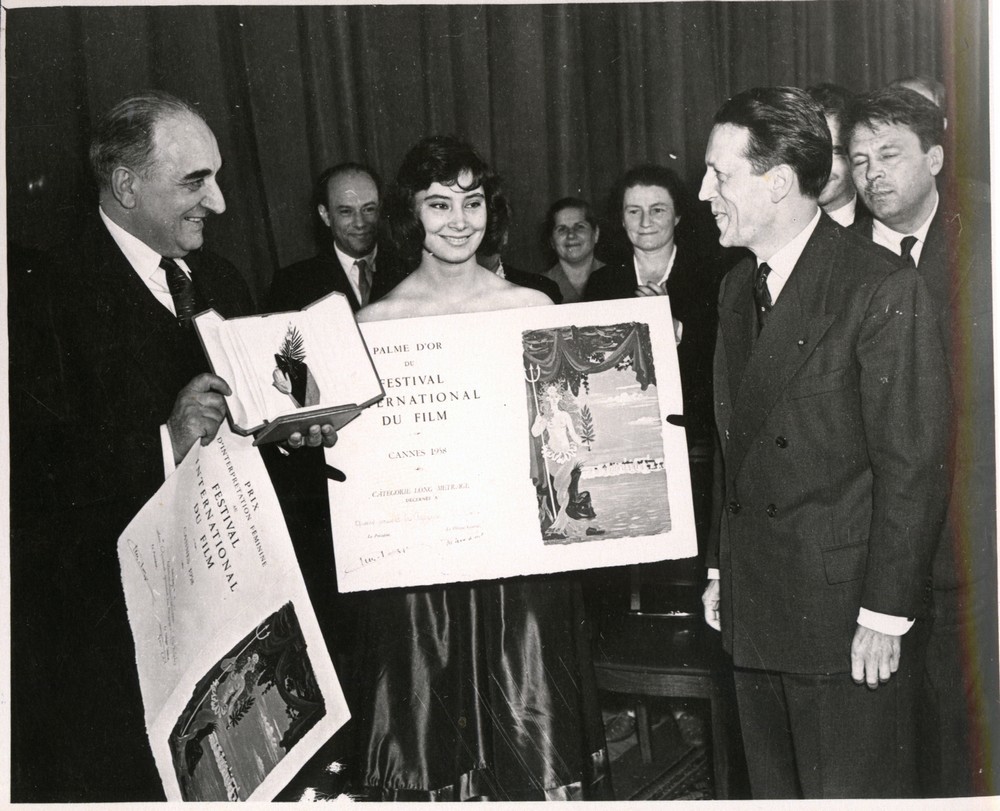
18 May — at the Second Cannes Film Festival, the “Palme d’Or” was awarded to the Soviet film “The Cranes Are Flying”.
28 May — the CPSU Central Committee rescinded its own resolution of 10 February 1948, in which Shostakovich, Prokofiev, Khachaturian, Shebalin, and other composers were accused of developing an “anti-people formalist trend in music.” The operas “The Great Friendship,” “Bohdan Khmelnytsky,” and “From the Bottom of My Heart” were rehabilitated.
29 December — the concept of an “enemy of the people” was removed from the Criminal Code of the USSR.