
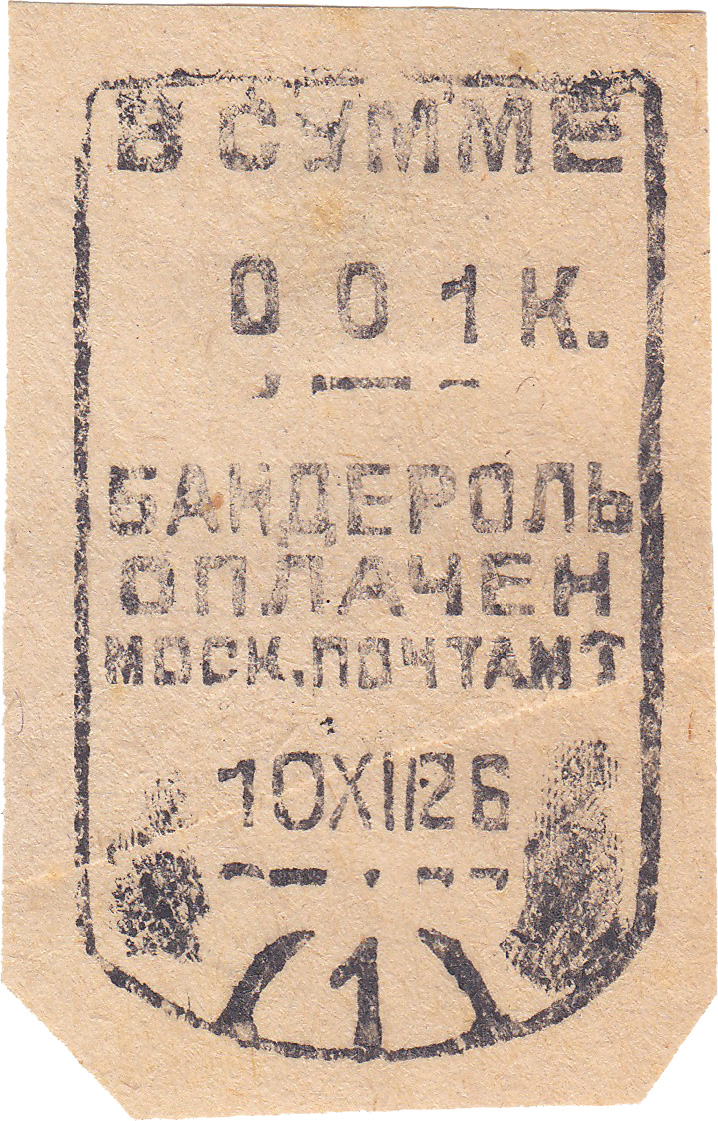
The first entries in the archival documents of the Moscow Post Yard date back to October 22, 1722. However, the first staffing table and employees’ salaries were approved only on December 24, 1724. On February 19, 1725, the Moscow Post Yard officially received the name “postamт” (post office), and Wolfgang (Vladimir) Pestel was appointed as its head. After one of the Moscow fires, the post office was left virtually without a roof. And in 1742, by order of Empress Elizabeth Petrovna, a site began to be sought for the Imperial Moscow Post Office. One option after another was proposed, and they ultimately settled on a complex of buildings located between Myasnitskaya Street and the Ogorodnaya Sloboda (Myasnitskaya Street, 40).
According to documents from 1743, the Moscow post office handled about thirteen letters. But the postal service still needed more space. By 1785, an estate was rented for the Moscow post office at the intersection of Myasnitskaya Street and Chistoprudny Boulevard. Initially the property belonged to Lieutenant Alexander Menshikov, and later to landowner Ivan Lazarev. The new complex consisted of a three-story stone house set back on the plot, where customers were served, and separate wooden buildings.
This would become the permanent location of the Imperial Post Office. In 1858 the city bought the Menshikov estate building and moved here part of the postal services that had previously been scattered around the city. By the end of the 19th century it would become an entire complex of 17 structures, including a home for elderly employees of the postal and telegraph department and a new post office building in the Russo-Byzantine style. The “zero kilometer” was also supposed to be located here. The zero kilometer did not work out—it ended up closer to Red Square—but the idea was sensible. The mileage used for calculating mail delivery distances should be counted from where the mail is accepted and dispatched to recipients.
The cornerstone laying for the new Moscow post office building took place in 1910, and only two years were allotted for all the work. The construction of the post office became a major event not only for Moscow but for all of Russia. The building was erected to a design by Oscar Muntz; architects Leonid Novikov and the Vesnin brothers also took part in the design and construction. The project was based on the idea of concentrating all essential postal operations in a single hall covered by a triple glass roof. The spacious operations hall, with delicate three-tier galleries and a striking skylight lantern, became the inner core of the post office ensemble, linking parts of the new building with the service areas. O. R. Muntz wanted to build the structure in the style of a luxurious Byzantine palace with striped masonry, but the Vesnin brothers insisted on a restrained facade design.
The work was done so well that the post office on Myasnitskaya did not require major repairs for a long time. The interiors of the Imperial post office were very similar to those of the Paris post office. The operations hall was the largest in Europe.
During the October armed uprising, the post and telegraph complex on Myasnitskaya Street became a site of military clashes between cadets and Red Guards. But it continued its work. In 1924, the People’s Commissariat of Posts and Telegraphs (Narkompochtel) was formed, and the Moscow post office came under its authority.
And the 1990s brought the Moscow post office plenty of bad memories. For a time, the central building was leased to a tennis club; later it was taken over on lease by the Russian Commodity and Raw Materials Exchange.
From the early 2000s, when Russian Post consolidated all профиль-related organizations, the building of the former Imperial Moscow Post Office became part of it, and the building, left without proper oversight, began to deteriorate quickly. The management of Russian Post hesitated for a long time to begin restoring the building... Today, the Moscow post office complex consists of 22 buildings and structures located on a 2.7-hectare site. Three buildings have finally been recognized as cultural heritage sites of regional significance and are under state protection.
Restoration work began in early 2020; there was a short delay due to the pandemic. The historic appearance of the 1912 building will be restored. All work is being done by hand: the skylight lantern covering the large operations hall is being rebuilt, as are the stucco decor, wrought-iron railing grilles, and the staircases themselves... Over many years, many buildings in the complex have fallen into disrepair, and many have acquired additional extensions. Some buildings will be partially reconstructed; some will be demolished to free up the area for a future fashionable cluster—a recreational zone for residents and a working zone for the post office. But there are two more buildings, besides the main one, that also fall under state protection. Restoration is also planned for the adjacent Almshouse, which was intended for postal employees retiring. And the former carriage shed already looks excellent and has been given a new function.