
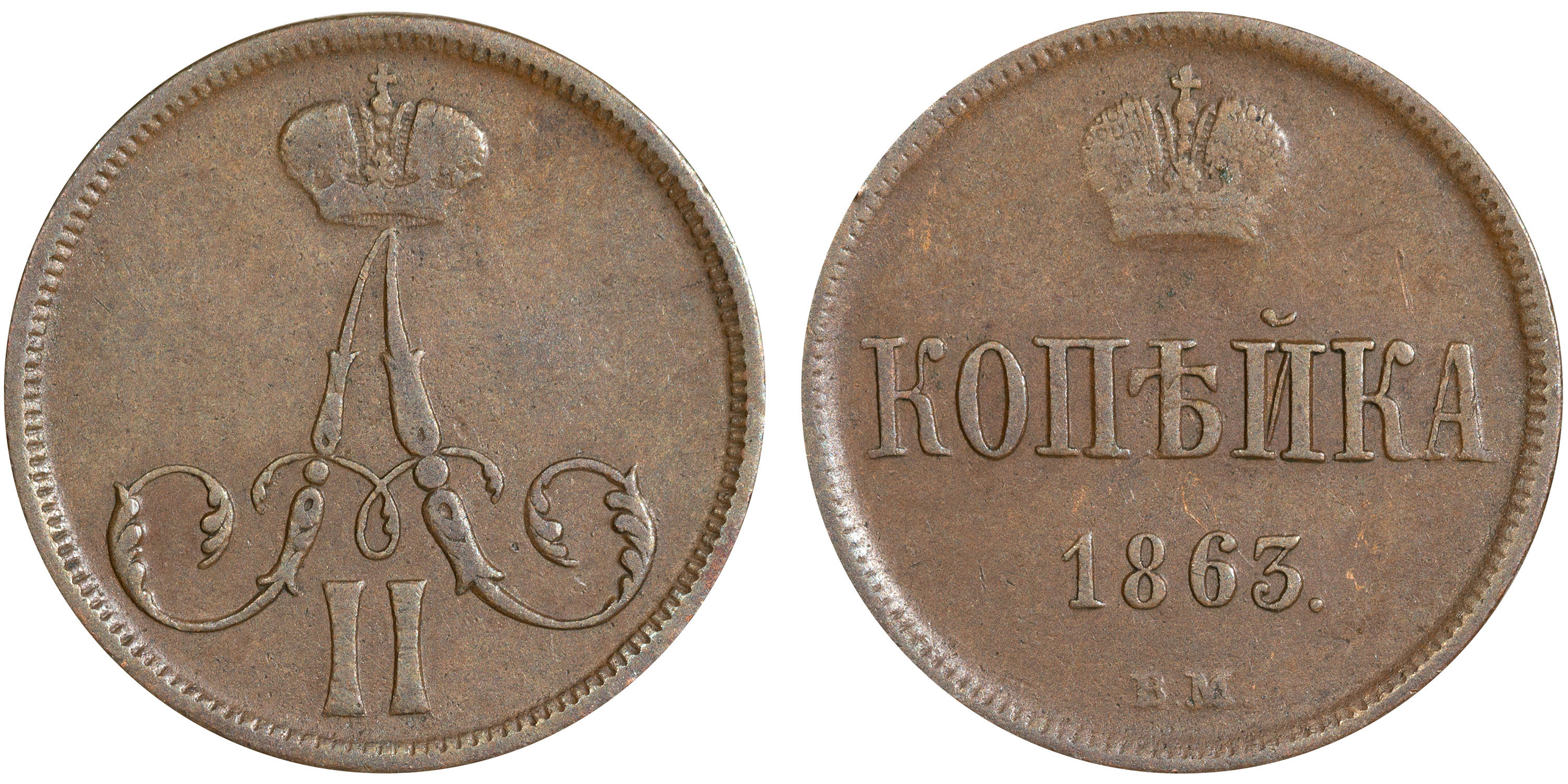
Banknotes, under the influence of speculation, began to be presented for exchange at a rapid pace, and by November almost the entire amount of the loan that had been raised had been absorbed, along with part of the previous metallic reserve. Exchange was halted.
The law of April 17 sharply restricted corporal punishment for the “lower estates.” For peasants it remained possible only by verdict of volost courts. The most severe and most commonly used form of corporal punishment—running the gauntlet—was abolished. Whips, knouts, and spitzruten were abolished as well. That same year, the maximum age for conscripts was set at 30.
Wine tax farming was abolished. Free sale of alcoholic beverages was introduced for anyone who wished. Every container of wine or vodka, every drinking house, and every wine warehouse were taxed: the first with a special excise, the second with a special license fee. These fees were collected and accounted for locally by special institutions—excise administrations—whose staff were well paid and, where possible, recruited from educated people. Many taverns appeared.
An uprising in Poland, led by the Central National Committee. In January, a conscription drive was carried out. Escaped recruits formed the first core of insurgent detachments. There would be no battles, only skirmishes. Polish leaders captured with weapons in their hands would be hanged.
September 3 — Ivan Sergeyevich Turgenev, Russian writer, died.
January 1 — in the USA, Abraham Lincoln issued the Emancipation Proclamation.
January 10 — in London, the first Underground line was opened (3.6 km).
June 20 — the first bank in the USA was established (the National Bank of Davenport, Iowa).
October 3 — US President Abraham Lincoln declared the last Thursday of November to be Thanksgiving Day.
December 18 — Franz Ferdinand, Austrian archduke, was born; he was killed by Gavrilo Princip in Sarajevo in 1914, which became the pretext for the start of World War I.
December 19 — Englishman Frederick Walton patented linoleum.