
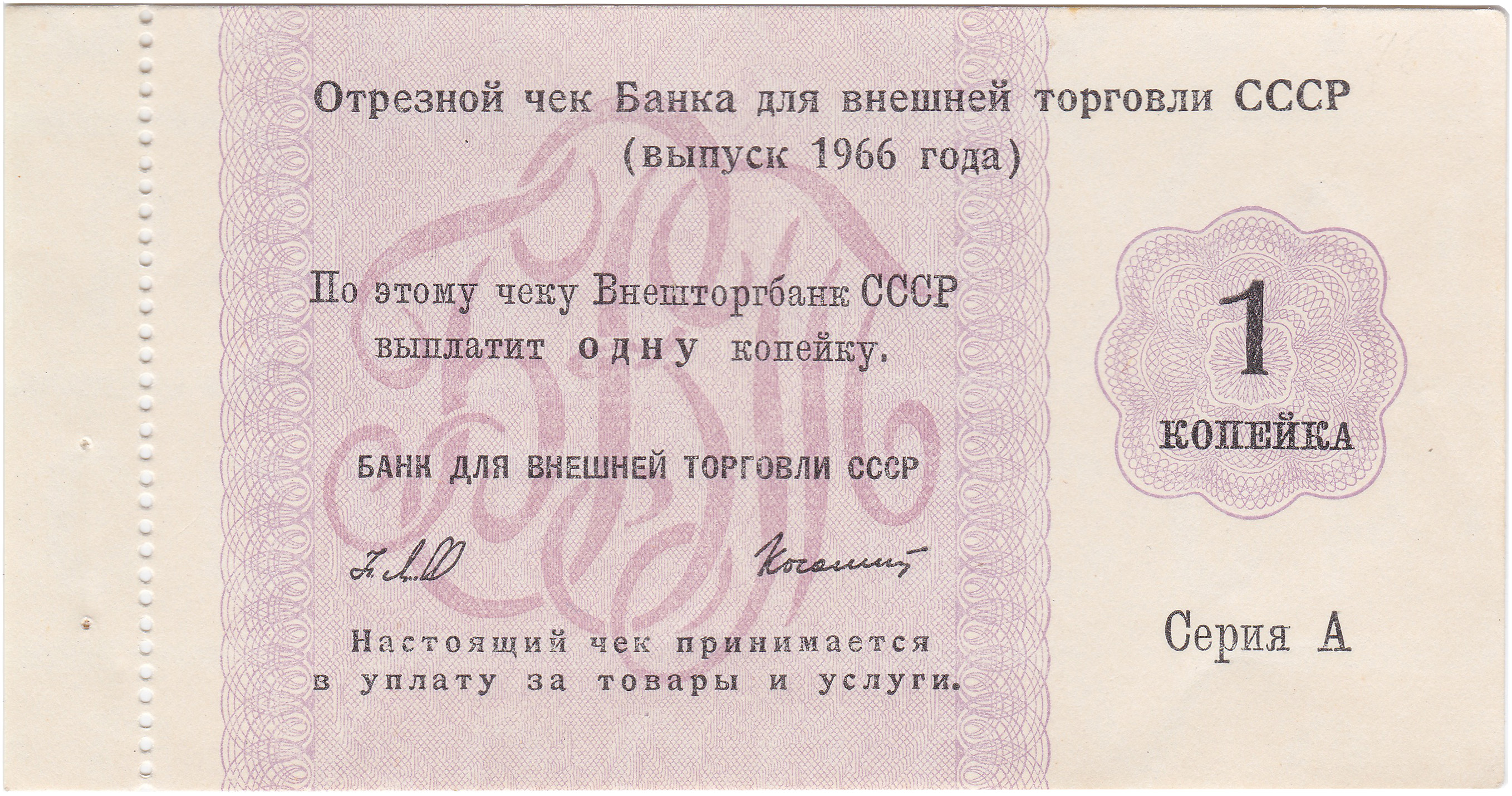
From the early 1960s, the USSR began to develop active cooperation with socialist and developing countries. Thousands of Soviet specialists were sent abroad to work. The government faced the question of how to "protect" them from foreign currency.
A practical need arose to create a system in which citizens would not receive foreign currency in hand and would spend the funds earned in foreign currency at home.
The most important parts of the new system were the USSR Bank for Foreign Trade (Vneshtorgbank of the USSR) and the all-Union association Vnesposyltorg. In the former, citizens were required to keep currency in the form of foreign-currency rubles, and through the network of stores and firms of Vnesposyltorg to spend it.
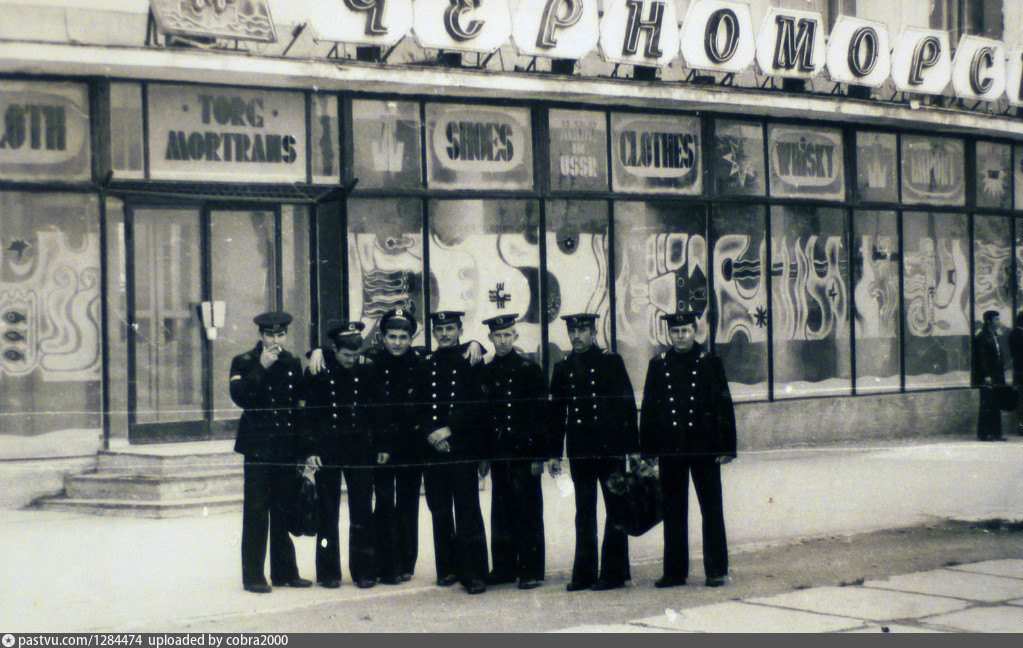
It is important to note that, unlike other socialist countries, "substitutes" for currency in the USSR were issued not for foreigners, but for its own citizens.
A detachable Series A check for sailors of Vnesheconombank (Vneshtorgbank) of the USSR is a monetary obligation of Vnesheconombank (Vneshtorgbank) of the USSR to pay the amount specified on the check. The checks were bound into checkbooks of the appropriate denomination. Detachable checks could be exchanged for goods in port cities of the USSR in stores of the "Albatros" system of the "Torgmortrans" organization. All checks were printed by GOZNAK.