
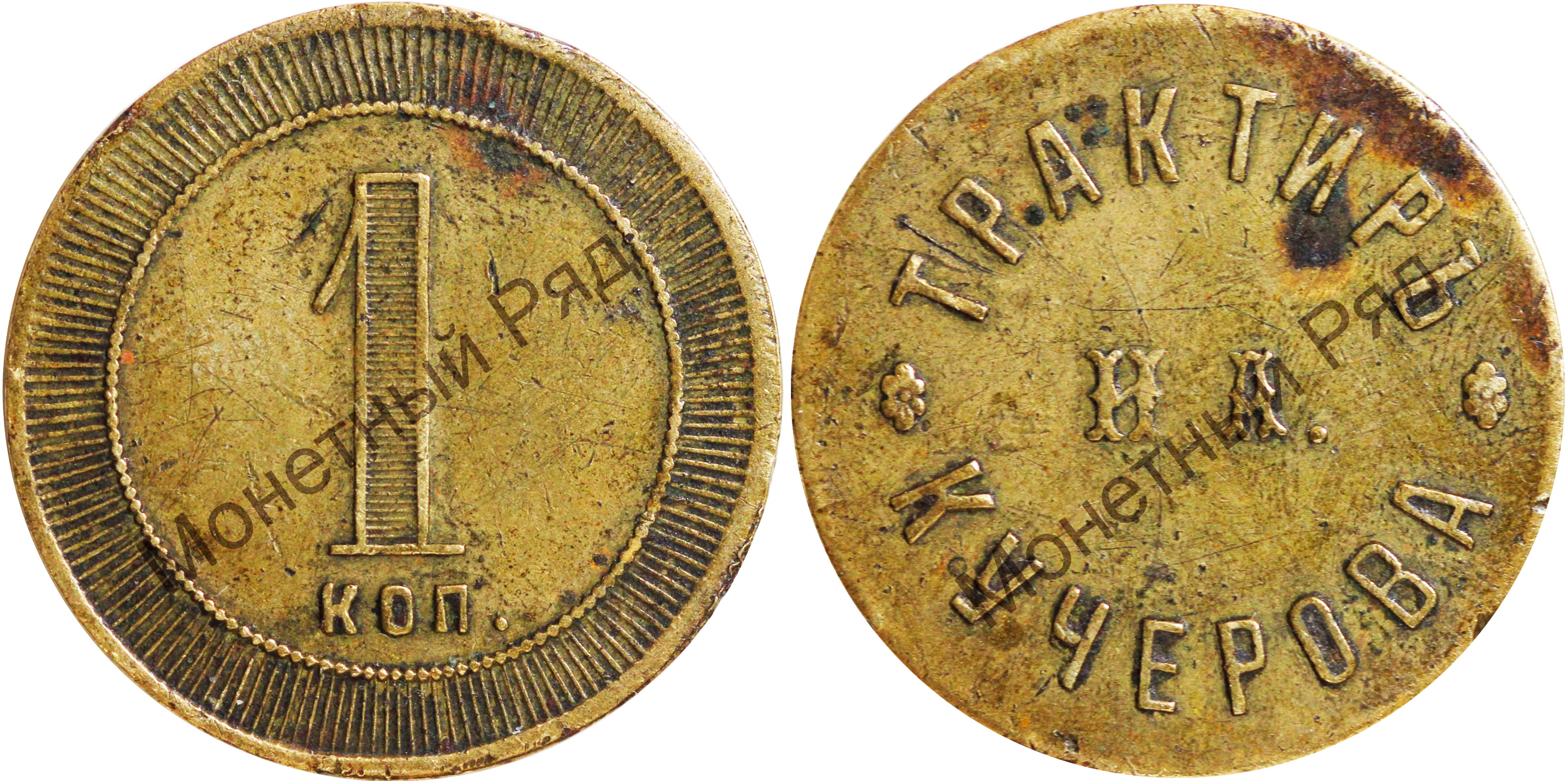
The token most likely comes from the "Golden Anchor" restaurant, which from 1914 to 1915 was run by the shrewd peasant Ivan Anisimovich Kucherov.
At the turn of the 19th and 20th centuries, the first restaurants began to open in Sokolniki. One of them, the "Golden Anchor," was located on Ivanovskaya Street (today Malenkovskaya, near Pesochny Lane). The restaurant stayed open until 5 a.m. and was famous not only for its cuisine, but also for its Romani choirs and variety programs. The reputation of this place was dubious; stories circulated around Moscow about epic feasts held there. Nevertheless, the restaurant was popular and prospered until 1917. After the October Revolution, the building housed the District Council of the Sokolniki District.
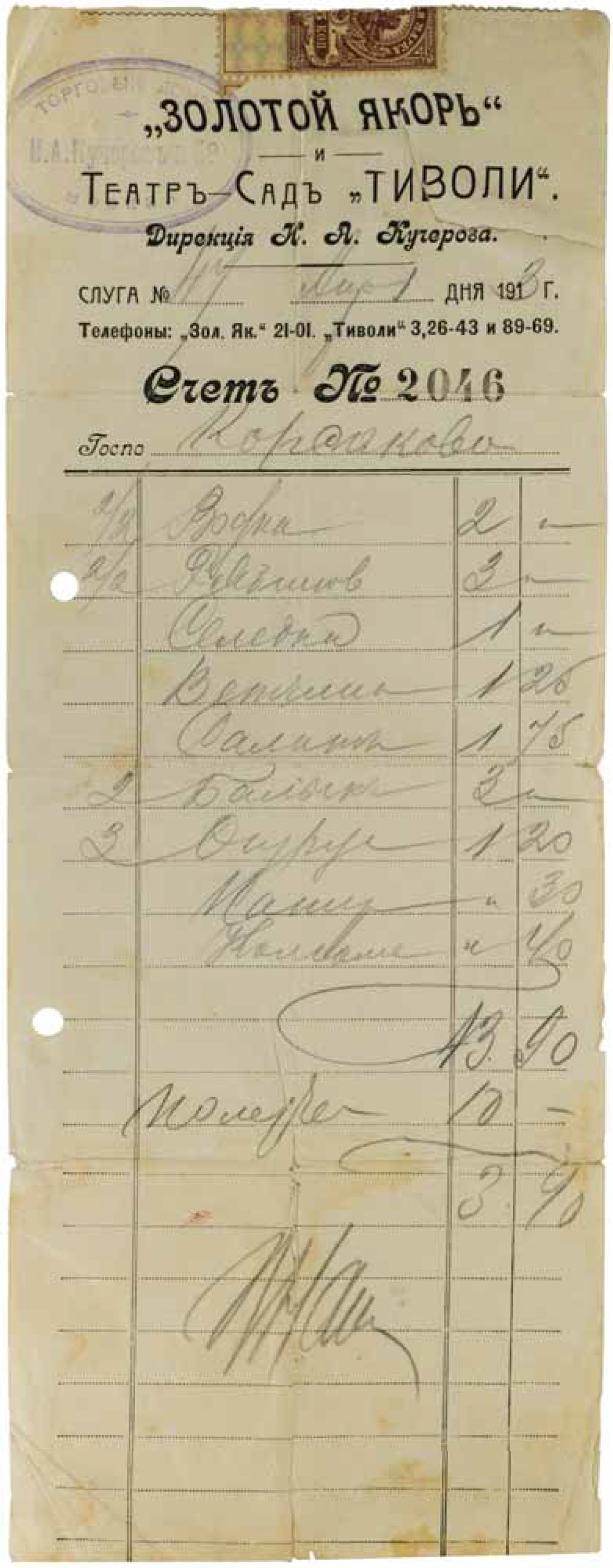
This bill shows that the guest ordered vodka and snacks for 13 rubles 90 kopecks, but paid only ten and still owed the rest. Credit was practiced in many restaurants if the customer was a frequent guest and had a decent reputation. When he did not have enough money, he would instruct the waiter to write down the debt, which he would settle at the first convenient opportunity. But if the waiters understood that the guest was asking to "put it on the tab" and had no intention of paying at all, they would call the police to draw up a report.
Restaurant and tavern tokens served as surrogate means of payment in the many drinking establishments of major cities in pre-revolutionary Russia. Coin-like tokens were part of everyday life in metropolitan and provincial restaurants, taverns, cafes, canteens, and snack bars. The issuance of tokens was tied to the desire of factory owners and operators of plants and other enterprises to increase their profits. Workers and employees received part of their wages in tokens and spent them in shops owned by the companies. Restaurant and tavern tokens appeared in Russia in 1875 and became widespread in major industrial cities. So-called tavern marks performed a purely official accounting function. They were intended for internal settlements between a restaurant’s staff and the cashier. Having become a fashion trend and a sign of wealth and prestige among restaurant owners, tavern marks became firmly embedded in Russian daily life and spread everywhere. Similar tokens were issued by restaurants, clubs, snack bars, taverns, cafes, and other drinking establishments.