
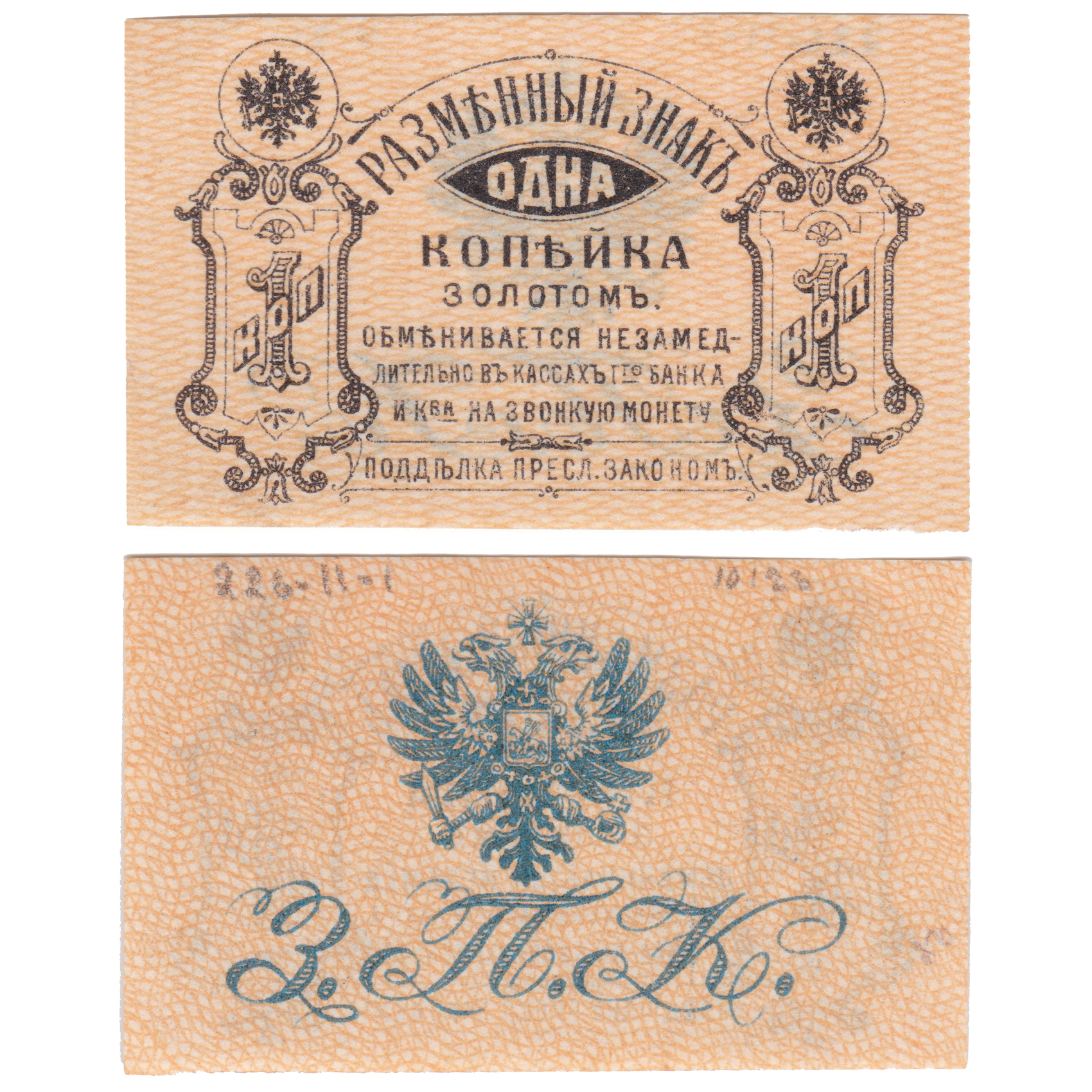
The Priamur State Formation, from 23 July 1922 the Priamur Zemstvo Krai, was a state entity that existed from 26 May 1921 until the end of October 1922 on part of the territory of the former Primorskaya Oblast of the Russian Empire, nominally belonging to the Far Eastern Republic.
The inability to cope with the growing partisan movement, as well as the defeats inflicted on the troops subordinate to the Provisional Priamur Government by the People’s Revolutionary Army of the Far Eastern Republic near Khabarovsk in the winter and spring of 1922, led in the summer of 1922 to the resignation of the Merkulov government and the transfer of real power to General M. K. Diterikhs, who combined the posts of head of government and commander-in-chief and was proclaimed on 23 July 1922 the Ruler of the Priamur State Formation. By his Decree No. 1, Diterikhs renamed the Priamur State Formation the Priamur Zemstvo Krai, and the army the Zemstvo Host.
From 10 July to 28 July 1922, the Priamur Zemstvo Sobor was held in Vladivostok, which elected General Diterikhs ruler of the Priamur Krai. In the oath he took, he promised “to answer for everything done in the line of duty of the Ruler before the Russian Tsar and the Russian land.”
The Zemstvo Priamur Krai was the last stronghold of the White movement in Russia and was liquidated in October 1922.
The financial policy of the authorities of southern Primorye for almost a year and a half was based on the sale of cargoes and other state valuables; on increased tax pressure and the exploitation of Primorye’s natural wealth by leasing it out as concessions; and on the non-payment of wages to their employees and workers. In addition, there were attempts to obtain funds from the de facto master of the region—the Japanese command, but the latter showed sufficient stinginess, and the money always had a specific designated purpose.
Cargoes, both government-owned and those stored at customs, formed the basis of the financial policy of the Priamur government. Cash receipts from excise, taxes, and import and export duties were also expressed in significant amounts.
True, tax receipts occurred only for the city of Blagoveshchensk and partly for Nikolsk-Ussuriysky, but the center of gravity of the revenue side was shifted to excise and export duty. Repealing the resolutions of the previous authorities, the new government granted almost complete freedom of export, since its entire policy was aimed not at regulating the region’s economic life, but at obtaining revenue from whatever could yield it and in whatever amounts. To this end, on an urgent basis, from the very first months of its existence the new authorities began leasing out to foreigners (in fact, to the Japanese), on concession terms, land and forest tracts regardless of their location.
An original measure on the path to strengthening finances was the permission to sow poppy, the imposition of a special tax on a sowing tithe of poppy, and the establishment of a monopoly on opium: its production, trade, and export. Special permits were issued for the right to maintain opium-smoking dens, and an institution was introduced—an inspectorate for opium affairs.
Despite protests from China, the innovation continued and provided the Priamur government with a constant source of income.
But the most significant income of the treasury was the underpayment of maintenance to its employees. The underpayment was not accidental, but systematic; the general political situation and the overall commercial depression offered no outlet for the mood of employees and workers, and the government, taking advantage of this, allowed itself what none of the preceding governments could have allowed.
Monetary circulation in the region shrank to a minimum—the rural population, through cooperatives and private traders, switched to barter as a form of trade association and almost completely did without money; the urban population, meanwhile, switched either to using the yen or to the remaining billon silver still in circulation, or to bank silver that appeared in Primorye in a fairly large quantity—Russian coins of 1 ruble and 50 kopecks. Demand for this coin was so great that throughout 1922 it was quoted in Vladivostok at no less than 1 yen 3 sen per ruble, whereas in Harbin the value of 1 ruble in bank silver did not exceed 1 yen 1 sen, and exchange bulletins in Harbin did not note a rate higher than 99 sen or 1 yen per 1 ruble.
From January 1922, the Vladivostok Treasury, for lack of funds, almost completely refused to pay government warrants. In this connection, the latter acquired a negative agio and were quoted on the market at a discount reaching 25–3G56.1
A complete lack of funds, as well as of banknotes, led to the Priamur government deciding to carry out an issuance of paper money. The financial-economic department developed its own project for issuing obligations in the amount of 50 thousand rubles by the end of June 1922. The government approved the developed project, but its implementation was delayed by the June political crisis.
On 8 July 1922, the Priamur government nevertheless issued Decree of the Financial-Economic Department No. 165 “On the issuance of short-term non-interest-bearing obligations of the State Treasury” for a total amount of 3,600,000 gold rubles.
This Decree was not destined to be implemented—on 8 August 1922, the Provisional Priamur Government ceded its power to the Supreme Ruler of the Zemstvo Priamur Krai, Lieutenant General M. K. Diterikhs.
A report was submitted to the Supreme Ruler on the need to repeal Decree No. 165: “The notes proposed for issuance, the obligations referred to in said law, have been assigned the functions of money signs, which signifies a revival of paper-money circulation, which entails profoundly negative consequences; however, the consequences inevitable under paper-money circulation—in the form of an unstable rate for this money and its rapid subsequent depreciation.
The issuance of these obligations threatens to completely destroy the budgetary balance now achieved with great difficulty, in the calculation of which a firm monetary unit—the gold ruble—was taken as the basis, since the discount interest on the obligations will constitute that breach in the zemstvo krai budget which it is not foreseen will be possible to fill.
The obligations being issued have: first, a limited sphere of circulation, and second, being obligatory for acceptance only by employees, workers, and military ranks at nominal value regardless of their market value on the money market, they constitute, with respect to the latter group of persons, i.e., the service class, a compulsory tender.
The indicated limitation of circulation of this money will contribute to a steady fall in its rate. At the same time, it is hardly possible to doubt that among suppliers there will be no one willing to conclude contracts with the treasury on the terms of mandatory settlement with them in the new money, and thus all the negative sides of these money signs will be forced to be borne only by the service, military, and civilian classes; and the imparting of compulsory tender to the obligations being issued only with respect to the last-mentioned group of persons must be regarded as nothing other than an intentional forced alienation by the treasury of part of the earnings of its employees.
A further consequence of putting the obligations into circulation will be: a) an extreme reduction of cash receipts to the treasury and a significant increase at the same time in the Treasury’s indebtedness (to ten million rubles), which debt is almost unbearable for an economically impoverished region; b) extreme difficulties for local trade, in one way or another calculated to serve the needs of the service class, and the condemning of the latter to a half-starved existence.
In view of the considerations expressed and recognizing that the present extremely responsible moment of reconstruction of power is entirely unsuitable for the issuance of any money signs whatsoever, and all the more of such as must inevitably depreciate in the shortest time, and also taking into account that the issuance of the obligations will in no way ease the State Treasury but will only create very significant agitation and dissatisfaction among broad circles of the population, and primarily among the service class, I would deem it necessary on my part to stop printing the said obligations and to break the contract with the contractor Gorev, who undertook the work of their manufacture.”
The report of N. M. Dmitriev, Manager of the Financial-Industrial Department, in August 1922 was approved by the Supreme Ruler; the planned issue was recognized as untimely and suspended, although, formally, the decree itself was not repealed.
Monetary circulation in fact was based on the Japanese currency, although formally the basic unit was the gold ruble. The shortage of gold coin, bank silver, and billon silver legalized the circulation of banknotes of Japanese banks. But for the convenience of settlements there was an urgent need for small change.
Having suspended the issue of short-term obligations, the government of the Supreme Ruler nevertheless decided in August 1922 to carry out an issue of small change notes.
The amount of the issue was set at 50,000 gold rubles. It was not intended to publish a special law on the issue, and the latter was to be carried out under the procedure of the emission right previously presented to the State Bank. The small change notes being issued were secured by a special gold fund and were subject to exchange for gold or silver (at the day’s rate) upon their presentation in the amount of one or five rubles.
The rate of the gold ruble in September 1922 was equal to 1 ruble in bank silver or 1.13 yen.
It was intended to issue small change notes in denominations of 1, 5, 10 kopecks in gold. First of all, printing began for denominations of 1 and 5 kopecks in gold. On the front side of these notes their denomination was indicated—one or five kopecks in gold—and it was printed: “Exchanged immediately at the cash desks of the State Bank and the Treasury for hard coin.” On the reverse side the state coat of arms was depicted—an eagle of the former imperial design—and three initial letters—the name of the state—“Z.P.K.”, i.e., “Zemstvo Priamur Krai.” The color of the notes: the 5-kopeck-in-gold denomination—bluish-gray with a blue coat of arms; and the 1-kopeck-in-gold denomination—light yellow with a blue coat of arms.
The October events of 1922 did not allow the issuance of the prepared notes to be carried out, and they did not enter circulation.