
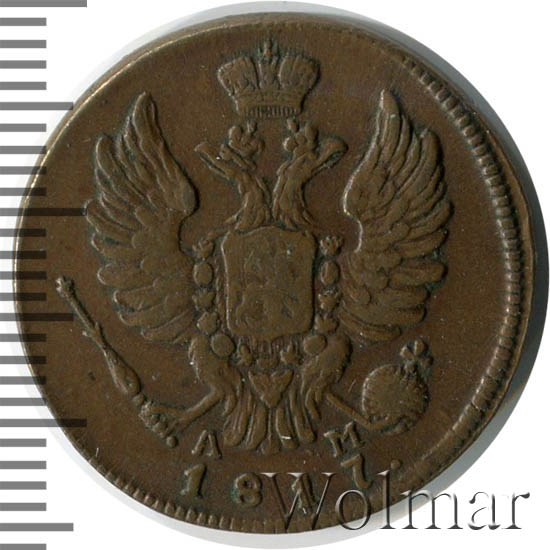
To combat inflation, banknotes worth 38 million rubles were burned. Banknotes totaling 800 million rubles remained in circulation; the amount of government interest-bearing debt exceeded 200 million.
June 4 — by government decree, Odessa was granted the status of a free city.
June 9 — graduation from the Tsarskoye Selo Lyceum. Few of the graduates would remain unknown afterward. Statesmen emerged, such as Baron Korf; poets, such as Baron Delvig; military scholars, such as Valkhovsky; political criminals, such as Küchelbecker. Members of the “Arzamas” circle watched the graduation of the young Pushkin as a celebration.
Emperor Alexander arrived with the Minister of Public Education, Prince Golitsyn. Engelhardt read a short report covering the entire six-year course; after him, the conference secretary, Kunitsyn, proclaimed the highest-approved resolution of the conference on graduation. After that, all the graduates were presented to the emperor, with the announcement of ranks and awards. The sovereign concluded the ceremony with a brief fatherly admonition. The Lyceum farewell song was sung in chorus.
June 26 — A.S. Pushkin, for modest achievements in studies, was not awarded the rank of titular counselor upon graduating from the Lyceum; he became a collegiate secretary, i.e., an official of the 10th class with an annual salary of 700 rubles, and may be addressed as “Your Well-Born.”
In August, as a translator for the College of Foreign Affairs, he settled in the capital. He wears a wide-brimmed hat, a Spanish cloak, and a broad black frock coat with untrimmed tails; he loves arguments and readily joins them. He has published few poems so far, but about one hundred and fifty poems lie in his desk, and many know of Derzhavin’s rapturous praise at the Lyceum examination. Pushkin attends weekly evenings at the house of the President of the Academy of Arts, visits the salon of the beauty Princess Golitsyna, nicknamed the “night princess,” and is a regular at the theater. Guards officers pass from mouth to mouth his verses that “scorned the censor’s seal.” His reputation after leaving the Lyceum is bad in the official world, but it arouses sympathy among opposition-minded people.
July 25 — the Nizhny Novgorod Fair began operating, replacing the well-known Makaryev Fair. It would flourish for almost a hundred years.
July 29 — Ivan Konstantinovich Aivazovsky was born, an outstanding Russian marine painter.
September 29 — Alexander Vasilyevich Sukhovo-Kobylin was born, a Russian dramatist, author of satirical plays: “Krechinsky’s Wedding,” “The Death of Tarelkin,” and others. He translated Hegel and wrote his own philosophy of the All-World.
October 12 — the laying of the Cathedral of Christ the Savior took place on the Sparrow Hills. The idea of building the memorial church belongs to Pyotr Kikin, a general and associate of Emperor Alexander I. Implementation began immediately after the end of the war with the French. In the minds of most people, the victory over Napoleon’s army, achieved in 6 months and 2 days, was perceived as nothing less than a miracle. All Moscow residents whispered that the church would not stand there: the sand was loose, and in autumn and spring it was impossible either to walk or to drive across Devichye Field. But it was ordered to build there, because in 1812 the last enemy picket had stood there. The plan was drawn by Alexander Lavrentyevich Vitberg, Swedish by origin. He became an architect precisely because he was inspired by the idea of creating this church, having no practical construction skills. From among many submitted designs, Alexander chose Vitberg’s project and appointed him head of the commission in charge of building the church. In 1825, the work was halted, and the architect, together with other members of the building commission, was accused of financial embezzlement; Vitberg would come under investigation, be tried, and exiled to Vyatka Province.
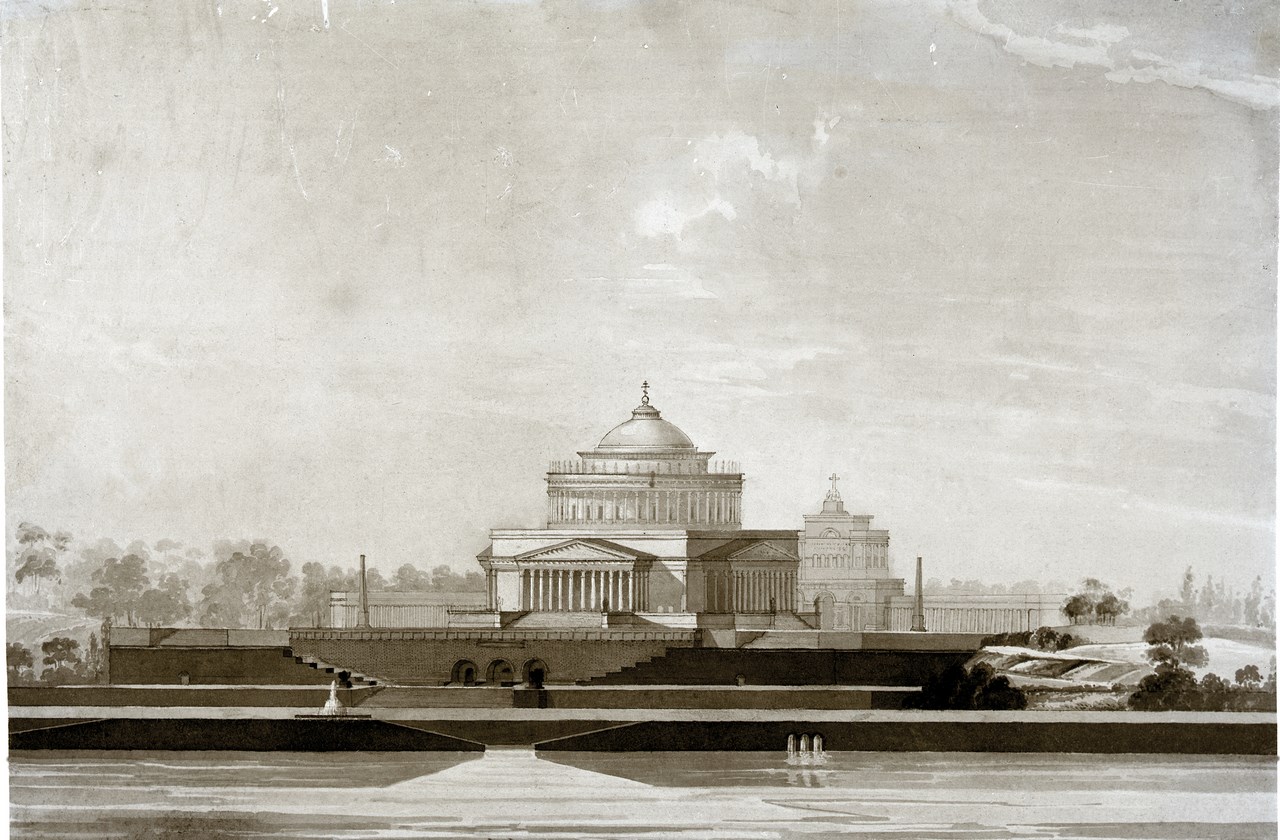
October 12 was very cold. A tent with fireplaces and a large platform were arranged for the highest persons; from the church to it a road was laid, covered with boards and sprinkled with sand, and upward to the top of the hill—a wide staircase. On the platform, covered with red cloth, an elongated ambo was prepared, and on it were: a stone cube, water in a silver holy-water bowl, and places for setting miracle-working icons from the Dormition Cathedral. At eight in the morning, the peal of bells began in Luzhniki. The arrival of the clergy and secular authorities and all noble persons was назначен for nine thirty. Troops were placed from the Kremlin along Mokhovaya Street, Prechistenka, Devichye Field, to the Sparrow Hills on one side in four ranks. The artillery was commanded by Major General Pavel Nikolaevich Marlin. At eleven in the morning, bell ringing across all Moscow and regimental music announced that the imperial procession was leaving the Kremlin. Emperor Alexander Pavlovich, Grand Duke Nikolai Pavlovich, and the Prussian Prince Wilhelm rode on horseback, while the sovereign empresses—Elizaveta Alexeyevna and Maria Fyodorovna—and Grand Duchess Alexandra Fyodorovna rode in a ceremonial carriage drawn by eight horses.
In the church, the liturgy was celebrated, then a крестный ход followed—in it participated more than 30 archpriests, 300 priests, and about 200 deacons. The icons were placed in the prepared spots; a prayer service with the blessing of water was performed; the Archbishop of Dmitrov sprinkled holy water on the place where the first stone was to be laid, and Vitberg brought the emperor a gilded copper cross-shaped plate with an inscription. The sovereign placed this plate into a recess in a granite stone. For the sovereign and the empresses, Vitberg brought trays with marble and lime, and silver hammers and trowels. Stones were set into the foundation of the church. Then His Eminence Augustine delivered a speech. At the end of the ceremony, the procession moved back across the bridge to the Tikhvin Church.