
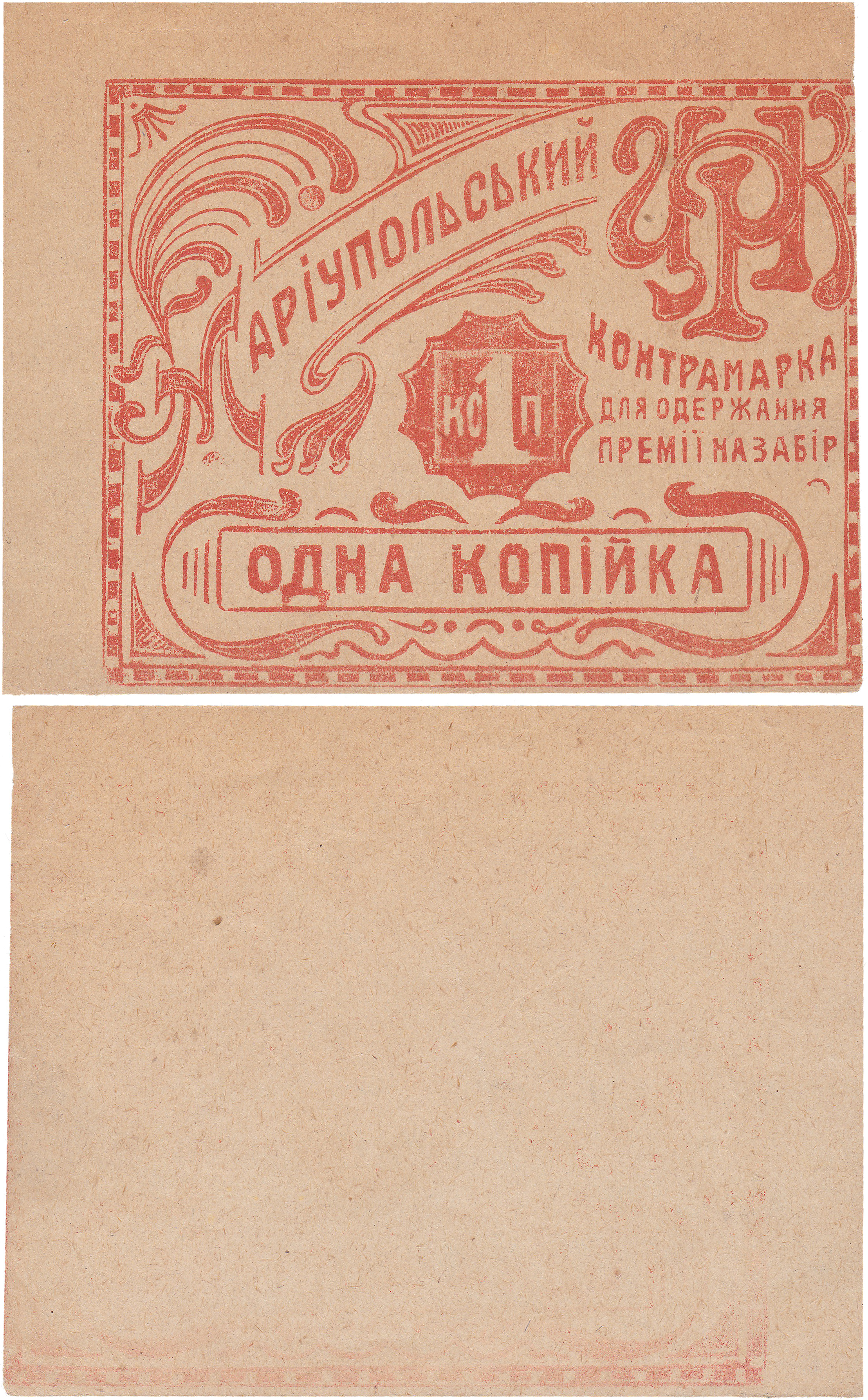
The development of the NEP led to a revival of trade in Mariupol: the largest cooperative union at the time was the Workers' Cooperative (Tserabkop), which by 1929 had united 84.6% of the city's population. By the mid-1930s, the number of newly opened shops had increased, and Tserabkop's retail network had become quite extensive (52 grocery stores, 26 ready-to-wear clothing stores, 15 butcher shops, 10 vegetable shops, 7 department stores and 7 bakeries, 5 other shops, as well as 14 kiosks and stalls, 2 coal depots, etc.).
By 1935 (the height of industrialization), the state sector in Mariupol's trade accounted for 74%, and new trading organizations were being established: Soyuztekstilshveytorg, Soyuzgalantereyatrikotazhtorg, Donplodoovoshtorg, and others. Several new shops appeared on Republic Avenue: "Gastronom No. 37", "Glavkonditer", "Glavtabak", "Glavryba", "Donkhlebosbyt"; new shops also appeared in the port (5 shops), on the Right (3) and Left (3) banks, and in the settlements of Apatov (1), Guglino (1), Kirov (1), Novosyolovka (1), and Slobodka (1). There were 4 bazaars: the Central one (on the former Cathedral Square); the Second one—"Skotskoy"—and "Sennoy" (located on Sennaya Square) were moved to the square near the metallurgical technical school; and bazaars in the port and at the Ilyich Plant.
In 1926, the 1st NarPit canteen began operating at the Ilyich Plant; by 1928–1929 there were already 5 canteens in the city and 12 tea rooms and snack bars; and by 1935 there were 92 restaurants and canteens and 31 snack bars (their number decreased after the ration-card system was abolished in 1935; thus, in 1937 Mariupol had only 25 canteens and 71 snack bars left).