
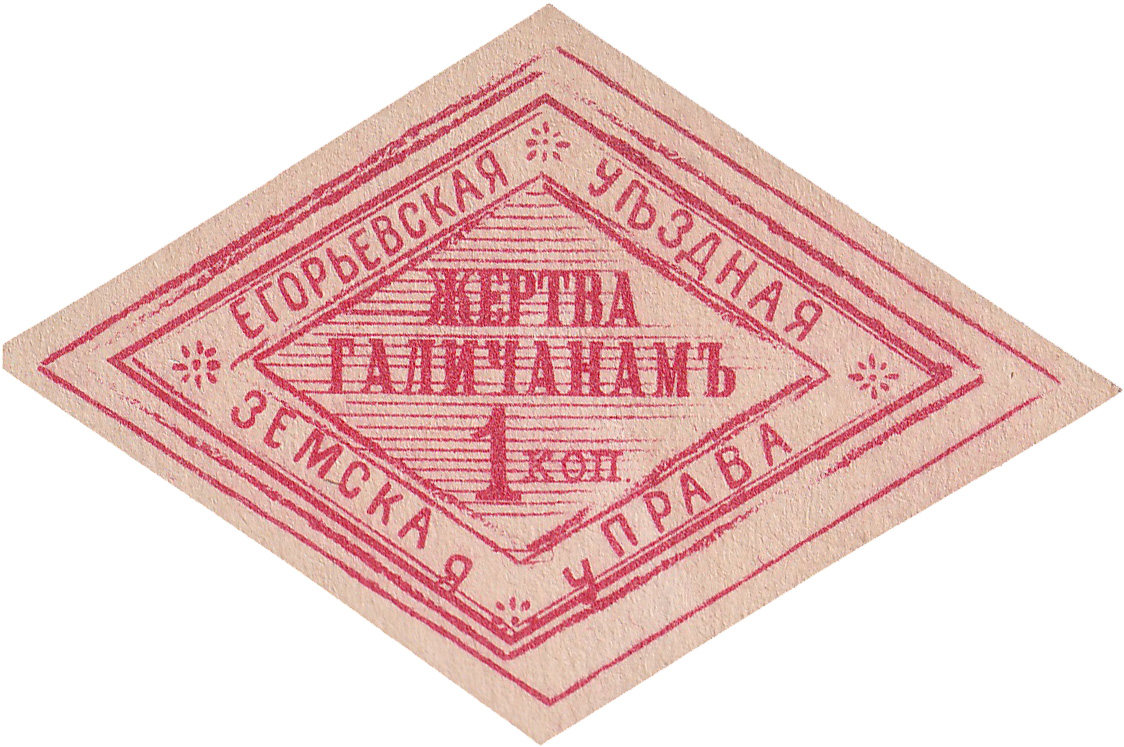
Galicia (a multi-part territory that consisted of the so-called Red Ruthenia and Lesser Poland) was not always a region hostile to Russia and Russians, as one might think judging by events of recent times. It is hard to believe that in the very same cities where the chant “whoever doesn’t jump is a Moskal” is heard, a hundred years ago tens of thousands of people openly spoke of their loyalty to the Russian language, Russian culture, and Orthodoxy. Such people were called Rusyns; in Galicia their numbers reached hundreds of thousands. They lived in their historical homeland—the land inhabited by their ancestors for many centuries—despite the fact that by the beginning of the 20th century Galicia had already belonged to the Austrian Empire for more than 100 years. In 1772, as a result of the First Partition of Poland, Galicia passed to Austria.
Immediately before the war, the Austro-Hungarian authorities launched a campaign directed against the Rusyns. Most often they were accused of espionage in favor of Russia. In 1910 the Austro-Hungarian authorities shut down most Rusyn organizations in the region, and in 1913 the Marmaros-Sziget trial began in Ugrian Rus, in which 32 people were sentenced to prison terms for converting to Orthodoxy. In 1911 the governor of Galicia, M. Bobrzynski, declared in the Galician Sejm that he was “fighting against ‘Russophilism’ because it is dangerous for the state.” Lists of politically unreliable citizens began to be compiled; with Austrian pedantry, all Rusyns who had “compromised” themselves were entered into them: those who spoke Russian, supported their representatives in the Sejm, or simply identified themselves as Russians. The core of such lists consisted of “zealous Russophiles,” who were to be “kept under close watch and, if necessary, arrested.”
All of this was preparation for a full-scale tragedy for the Rusyns that unfolded during the war. The Austrian authorities, playing on contradictions between the Ukrainian and Russian population, encouraged “informing” on the unreliable in every possible way, often with material rewards. Thus, according to the official Austrian “Appeal to Poles, Ukrainians and Jews” of 1915, the “delivery of a person who will be caught in espionage or in propagating Moscophilism” was rewarded with “50–500 crowns.” As a result, contact with the local population was established fairly quickly, and the “Rusyn question” was often resolved with their hands. V. Vavrik, a former prisoner of Thalerhof, gives the following testimony in his book “Galician Rus in 1914”: “In the village of Zapytov, on the denunciation of Khomyak, the Austrians drove people out of the village into an open field, bound them with ropes and drove them around like that all day, and toward evening hanged 15 people.” Entire villages were often arrested.
With the outbreak of war in August 1914, coercive actions against the Rusyns took on a mass character. The official authorities of Austria-Hungary no longer even considered observing formal legality, justifying everything by wartime. The same V. Vavrik describes what happened in the village of Tsunev in Horodok district as an example of anti-Russian terror that swept Galicia in 1914: “Austrian soldiers arrested 60 peasants and 80 women with children. The men were separated from the women and lined up by the trees. A Romanian soldier threw a noose over their necks and hanged them one after another. After a few minutes the other soldiers took down the bodies, and those still alive were finished off with bayonets.” Russian-language newspapers periodically published testimonies about the killings of Rusyns. The killings were brutal: in the village of Rechky, “they hanged the peasant woman Poronovych for the fact that, having learned in Uhniv about the approach of the Russian army, she told her neighbors about it” (“Carpathian Rus,” 1914, No. 1432); in another village, gendarmes “staged a hunt for peasants when they were leaving church after the service,” arresting about 30 people. And 74-year-old peasant Mikhail Zverok later said that he was arrested on August 24 after being denounced by one of his fellow villagers—“for reading the newspaper ‘Russkoye Slovo’” (“Thalerhof Almanac,” 1924, p. 35).
The tragedy in Przemysl, which occurred on September 15, 1914, stands apart. On that day, right on the city streets, a crowd of local residents beat to death 44 arrested “Moscophiles,” mostly peasants and members of the clergy. Among the dead was Maria Mokhnatskaya, the 17-year-old daughter of a priest. The fate of her family is a typical example of what happened to entire Rusyn families in Galicia: her father, Fr. Ignaty, was in Austrian captivity and died immediately after his return, and her brother was shot by the Austrians in 1915.
In the very first weeks of the war, in August 1914, all the prisons of Lviv were filled with Rusyns (more than 2,000 people), who were accused of spying for Moscow. A reasonable question arose: what to do next with a population deprived of rights (no one stripped the Rusyns of Austrian citizenship!). As a result, the Austrians found a solution unprecedented in European history: the first concentration camp on the continent, Thalerhof, was created, filled according to an ethnic principle. The camp was located near the Abtissendorf railway station, and today on that site is the military and civilian airport of Graz (Austria). Thalerhof became the prototype for Nazi concentration camps such as Dachau, Auschwitz, Buchenwald, and others. Besides Thalerhof, other camps were created, the best known of which is Theresienstadt—in northern Bohemia, not far from Prague.
However, in the autumn of 1914, when the first trains from Galicia with arrested Rusyns began arriving in Thalerhof, the camp itself did not yet exist—there were not even barracks, and people (the youngest prisoner was only a few months old, the oldest 91) were forced at first to sleep literally on the ground, using improvised means to arrange everyday life. The camp administration did not even provide dishes. People drank and ate from found old cans. According to former prisoners (their stories and testimonies formed the basis of the four volumes of the “Thalerhof Almanac,” published in the 1920s–1930s), the food was very scant: “In the morning they received a bean broth; at noon, the same kind of beet soup. Sometimes salted turnip and a piece of herring.” As a result, in the first winter more than 1,100 people died of typhus, hunger, and other diseases.
In total, between 20,000 and 30,000 people passed through Thalerhof, accused only of calling themselves “Rusyns” and Orthodox. According to various data, between 2,000 and 3,500 people died in the camp. The persecution of the Rusyns ended only on May 10, 1917, when the new emperor of Austria-Hungary, Karl I, decided to abandon the practice of ethnic genocide, and the camp was closed. In his rescript, the emperor wrote: “All the arrested Russians are innocent, but they were arrested so as not to become such.”