
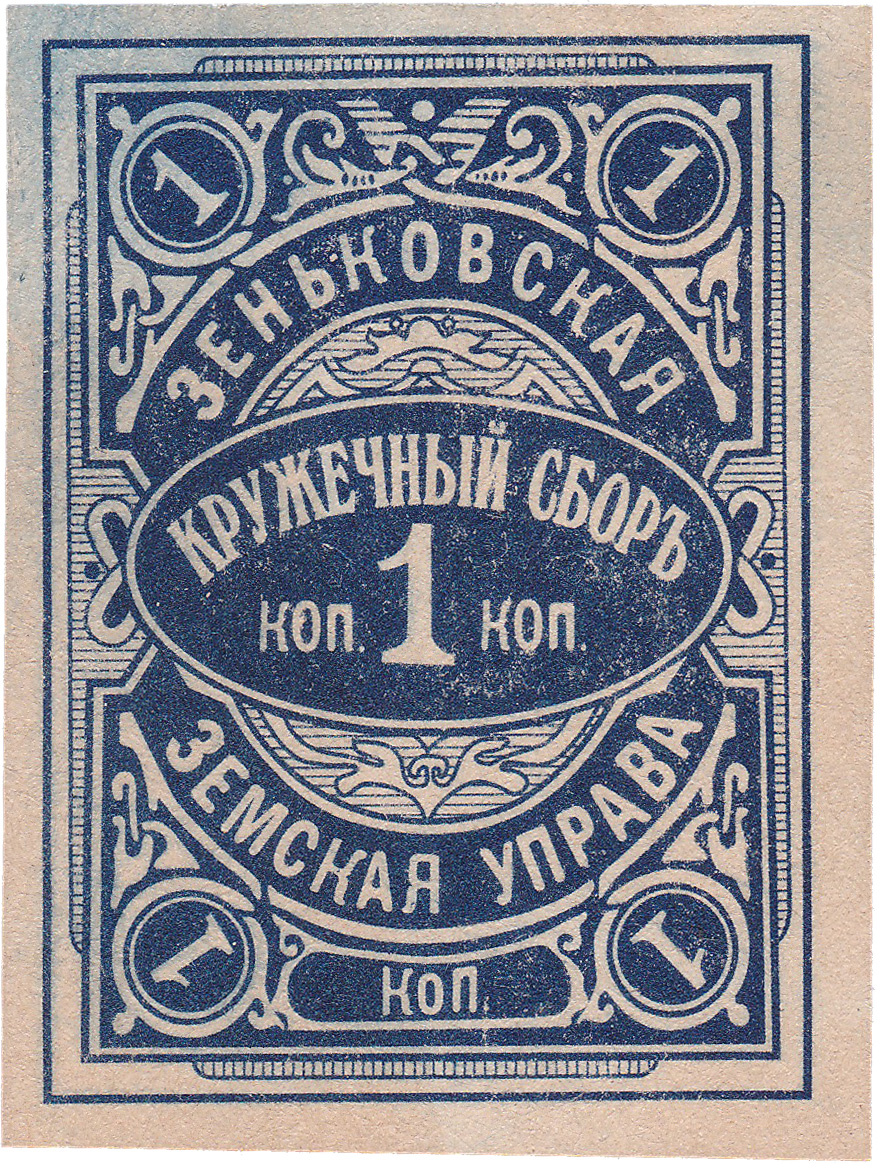
Box collection is a form of mass fundraising for charitable purposes. In Europe it has been known since the Middle Ages, when it was widespread everywhere.
In Russia it was recognized by a Senate decree of April 20, 1781, “On measures to provide food for beggars,” as a tool for raising funds by the Boards of Public Welfare (provincial institutions established in 1775 by order of Empress Catherine II to organize assistance to the poor by setting up hospitals, schools, almshouses, and orphanages). The decree, in particular, stipulated: “The Board of Public Welfare, being responsible for feeding the needy, is obliged to establish boxes for collecting alms therein, given by willing donors.”
From the late 18th century, box collections began to be organized by private individuals, and from the 1870s also by charitable organizations. Both acted in coordination with the Ministry of Internal Affairs. In each case, the location for placing the boxes and the procedure for removing, counting, and recording the collected sums were agreed upon.
The boxes, as a rule, were made of tin, had a lid with a lock and a slot for coins. At first, such boxes (officially called “public” or “collection” boxes) were usually placed at the entrance to churches. Later, in the 19th century, they were also placed in areas of lively trade—at Gostiny Dvor courtyards and street markets—as well as inside railway stations, in state and public institutions. The boxes were usually fastened permanently to the building’s stone wall. Nearby, five or six paces away, there was always a guard or police officer to deter thieves.
One of the first effective box collections was a charitable campaign devised by merchants in the interests of children’s shelters. It was organized at the initiative of the head (trustee) of the First Vasileostrovsky Children’s Shelter in St. Petersburg, the merchant Nikolai Terentyev. In December 1841, Terentyev submitted a report addressed to the chairman of the Main Trusteeship of Children’s Shelters, Count Grigory Stroganov, proposing that boxes be installed in places of brisk trade. Every merchant, the report said, began the working day with a prayer before the “ryadskie” icons (that is, icons placed in the trading rows). Beneath them there were always church boxes for collecting money to buy candles and lamp oil. Terentyev proposed placing charitable collection boxes next to the church ones: “the latter are guarded by the row watchmen,” who “must also guard these boxes.”
Terentyev’s proposal attracted the interest of senior officials. The idea of the children’s shelter trustee was also approved by Emperor Nicholas I. A special regulation of the Committee of Ministers was issued on the rules for this box collection. The Commission to supervise the box collection included five people, including the merchant Terentyev. The rules required the counter (one of the Commission members) to remove the money from the boxes once every two months, between the 25th and 30th. Then, in leather bags locked with a padlock, the counter delivered the money to the Commission. There it was recounted in the presence of all members, and the amount was entered into a register. The money was then transferred for the needs of St. Petersburg children’s shelters.
In the spring of 1842, Terentyev had 56 boxes made at his own expense. They were installed in Gostiny Dvor, at the Apraksin and Nikolsky markets, at the livestock yard, in the waiting halls of railway stations in St. Petersburg, Tsarskoye Selo, and Pavlovsk, at the St. Petersburg port customs office, and also on six steamships running between St. Petersburg and Kronstadt, and St. Petersburg and Shlisselburg.
The boxes bore engraved scenes on biblical themes and quotations from the Gospel, intended to remind benefactors of the need to care for orphaned children.
The first removal of funds took place in June 1842 at Gostiny Dvor. From eight boxes, a total of 84 rubles 29 kopecks in silver was collected. With this money one could purchase, for example, 4.8 tons of flour (in those years a sack of flour weighing nine poods (147 kg) cost 2 rubles 60 kopecks in silver in summer).
Box collection found an active response among the residents of St. Petersburg and its surroundings, as evidenced by donation tally sheets that have survived to this day. Thus, for June–November 1843, 286 rubles 85 kopecks in silver was collected in 45 boxes.
In the second half of the 19th century, box collections became ubiquitous in Russia. People participated willingly, since this form of philanthropy was accessible to everyone, had strict accountability, and was transparent: newspapers reported the collected sums.
During the Russo-Turkish War of 1877–1878, at the request of Grand Duchess Maria Fyodorovna (the wife of the future Russian Emperor Alexander III), boxes for collecting donations were installed on Nevsky Prospekt at the gates of the Anichkov Palace, the official imperial residence. These donations were transferred to the Russian Red Cross Society and went toward purchasing medical equipment for field hospitals and mobile sanitary detachments in the Balkans.
In January 1895, Vladimir Kovalevsky, Director of the Department of Trade and Manufactures of the Ministry of Finance, authorized the placement of a box in the ministry building. Ministry officials and numerous visitors, mostly entrepreneurs, dropped money into this box to support a free children’s canteen that had been set up earlier near the Admiralty at the initiative of the priest John of Kronstadt.
In addition to stationary boxes, portable ones also began to be used at the turn of the 19th–20th centuries. Collectors carried them during mass charity events, for example on White Daisy Day and Red Egg Day during Easter week.
On Red Egg Day, the Elisavetinsky Charitable Society raised money for children’s night shelters and children’s labor artels. Thus, on April 9, 1913 alone, across the country, more than 50,000 rubles was collected in 2,159 boxes (with only 72 boxes found to be empty).