
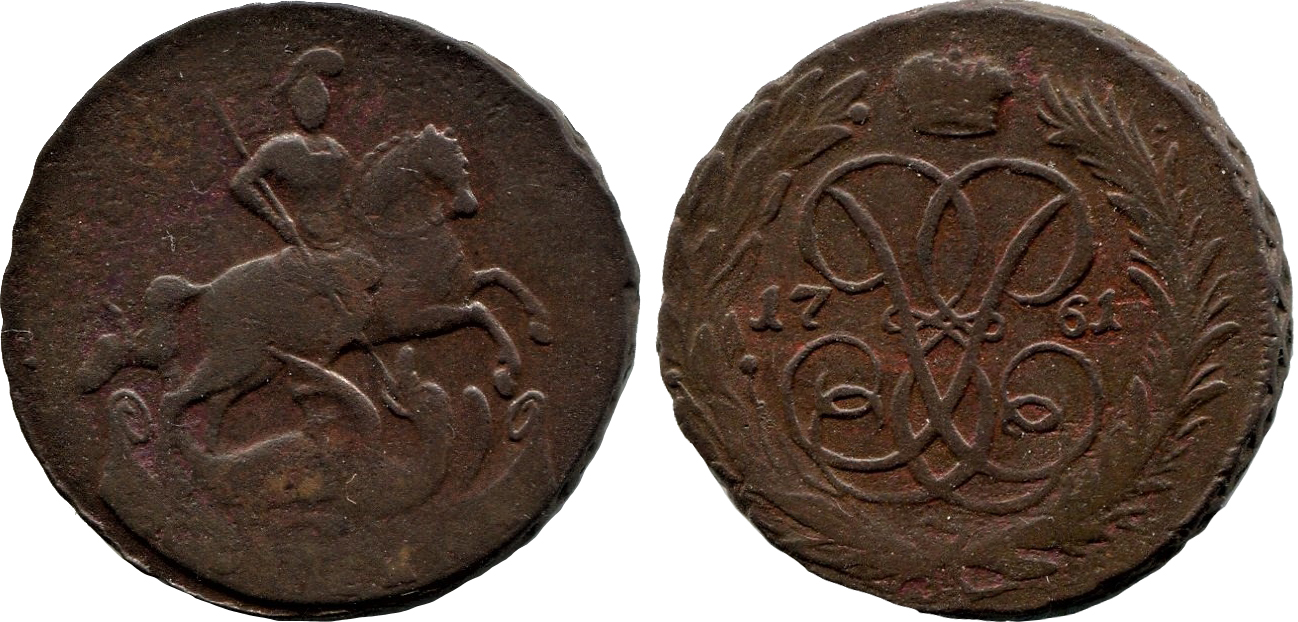
26 May — while observing the transit of Venus across the solar disk, M. V. Lomonosov discovered that it has an atmosphere. During the transit, Venus looks like a small black disk moving across the Sun.
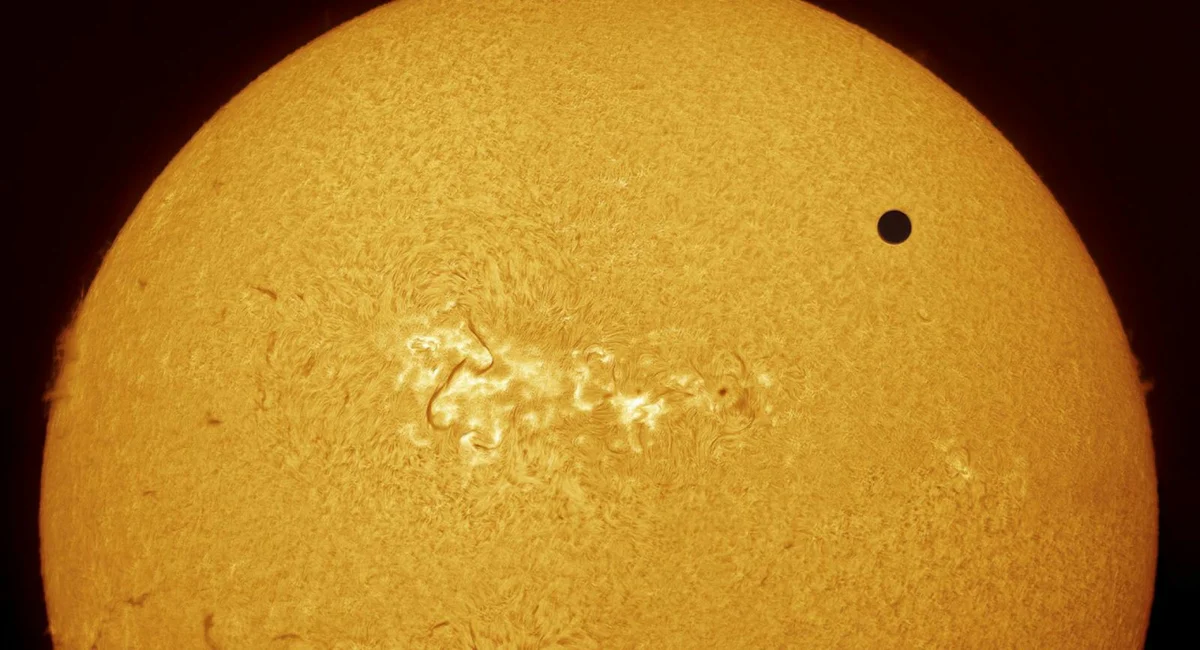
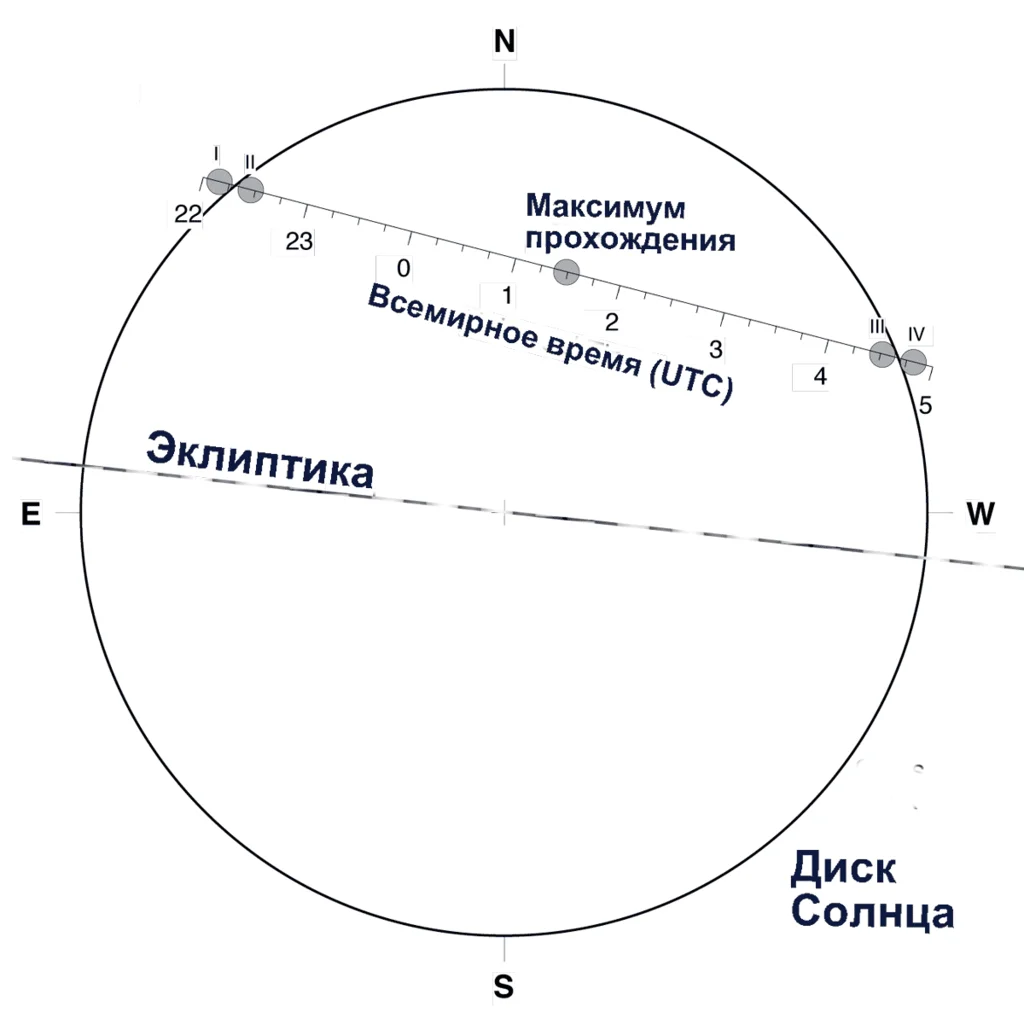
The special interest of Russian and foreign astronomers in the transit of Venus across the Sun’s disk on 26 May 1761 was connected with a new method for determining the solar parallax—the distance to the Sun—proposed in 1691 by the English astronomer Edmond Halley. For this method, it was necessary, at several locations on Earth sufficiently far from one another, to determine with maximum precision the time interval from the moment Venus entered the Sun’s disk to the last contact. During this transit of Venus across the Sun’s disk, observations were carried out by more than 100 astronomers at over 40 sites. It was the first major international astronomical undertaking.
M. V. Lomonosov made great efforts to organize this research in our country and abroad. It was conducted at 40 sites with the participation of 112 people. On 27 March he appealed to the Senate with a report substantiating the need to equip astronomical expeditions to Siberia for this purpose, petitioned for the allocation of funds for this costly undertaking, and compiled guidelines for observers.
Here is what he himself wrote on the subject in his work “The Phenomenon of Venus on the Sun, Observed at the St. Petersburg Imperial Academy of Sciences on May 26, 1761.”
- Therefore, sovereigns and governments, having a just concern for the common good, spare no expense for the building and establishment of astronomical observatories, for the maintenance and rewarding of people who know this science, and for sending them to distant lands to observe rare celestial phenomena, such as the recent occurrence of Venus on the Sun, which, besides observers in European observatories, also satisfied the curiosity of many astronomers sent from France and England to other parts of the world, with an increase of useful knowledge. From this Imperial Academy of Sciences, by the highest command of His Imperial Majesty from the Governing Senate, with double salary and with adequate provision of other necessities and instruments, Mr. Court Counselor and Professor of Astronomy Popov and Mr. Adjunct of Mathematics Rumovsky did not fail to depart for the remote Siberian regions and, it is to be hoped, employed their utmost diligence in observing this phenomenon.
Many observers saw the effect—Chappe d’Auteroche, S. Ya. Rumovsky, L. V. Wargentin, T. O. Bergman—but only M. V. Lomonosov correctly understood it and explained it by refraction of the Sun’s rays occurring in Venus’s atmosphere. In astronomy, this phenomenon of light scattering, the bending of light rays at a grazing incidence (in Lomonosov’s wording, a “pimple”), received his name—the “Lomonosov phenomenon.” “At Venus’s egress from the Sun, when its leading edge began to approach the solar edge and was (as can be seen with the naked eye) about a tenth of Venus’s diameter away, then a bulge appeared on the edge of the Sun, which became the more distinct the closer Venus came to emerging. Soon that bulge disappeared, and Venus suddenly appeared without an edge.”
In the article, Lomonosov noted that the solar limb became hazy when Venus approached it and when it moved away from it. The appearance of a bright rim around the disk of Venus, partly projected onto the Sun’s disk, is the result of refraction of the Sun’s rays in the upper layers of Venus’s atmosphere. In Lomonosov’s words, “this shows nothing other than the refraction of the Sun’s rays in Venus’s atmosphere.” Observation of this phenomenon led Lomonosov to the conclusion that Venus has a substantial atmosphere: “From these observations, Counselor Lomonosov reasons that the planet Venus is surrounded by a notable air atmosphere, such (if only not greater) as that which is spread around our earthly globe.”
Lomonosov’s discovery of Venus’s atmosphere made it possible to speak of Venus’s similarity to Earth. This discovery was of great importance for supporters of Copernicus’s teaching in Russia. And not only for them. After all, this discovery proved that Venus, and therefore possibly other planets, could be inhabited! This conflicted with church teaching. And in his work, Mikhail Vasilyevich explains that this is not so and offers very interesting evidence.
In these observations, Mikhail Vasilyevich used telescopes he had made. Academician S. I. Vavilov, who studied Lomonosov’s works for many years, concluded that “…in the scope and originality of his optical and instrument-building activity, Lomonosov was … one of the most advanced opticians of his time and, undoubtedly, the first Russian creative opto-mechanician.”
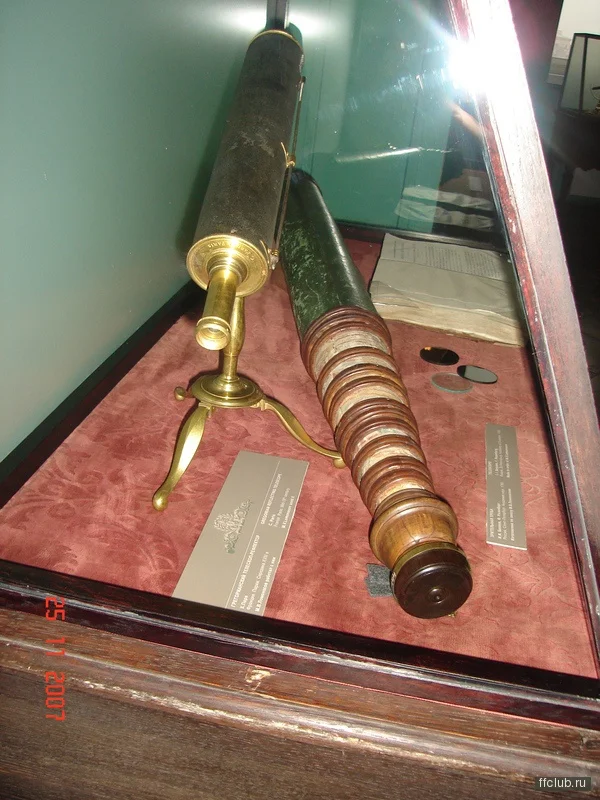
Lomonosov built more than a dozen fundamentally new optical instruments. “Besides these strict astronomical observations, Collegiate Counselor and Professor Lomonosov, out of curiosity and more for physical notes, observed at home using a two-lens viewing tube 4½ feet long. To it was added a very lightly smoked glass, for he intended only to note the beginning and end of the phenomenon and for that to use the full strength of the eye, and during the rest of the transit to give it rest.”