
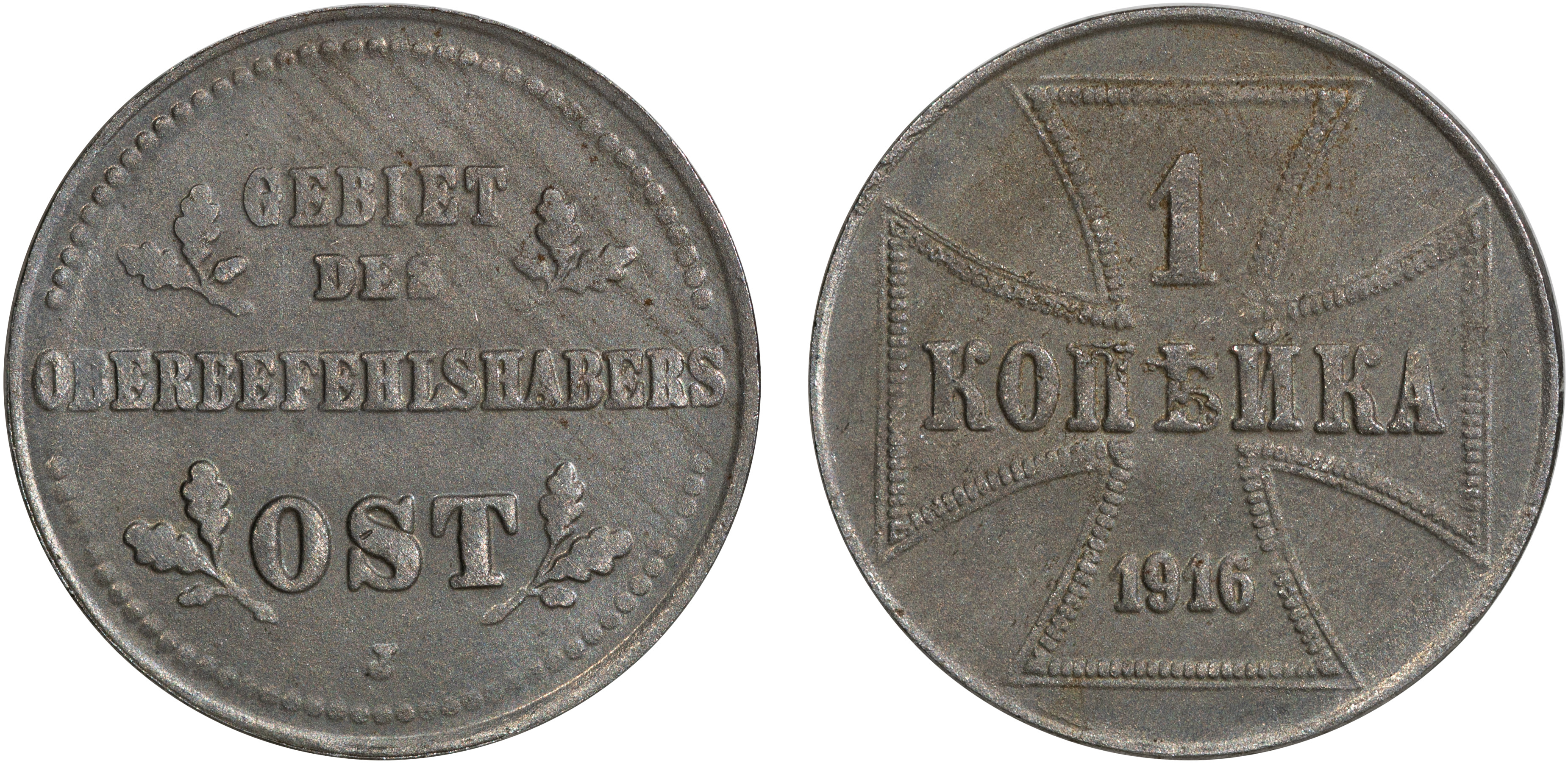
During the terrifying First World War, the German Empire seized vast territories in the west of the Russian Empire.
The Baltic lands, Poland, part of Ukraine, and Belarus were captured and occupied. In July 1915, German Field Marshal Paul von Hindenburg (a predecessor of Adolf Hitler) ordered that these occupied territories be formed into a special area called Oberbefehlshaber der gesamten deutschen Streitkraefte im Osten (territories under the authority of the Supreme Command of the German Armed Forces in the East).
Administering the occupied lands, with a highly complex ethnic composition and a total population of more than 3 million people, proved to be a rather difficult task for the Germans. In addition to exploiting seized industrial and financial resources, one of the most important challenges for the Germans was to make the fullest possible use of labor resources. The forcible seizure of grain and livestock from peasants, as well as the deportation of the population for forced labor, were common.
Devastation reigned in the occupied, plundered territories. To revive the economy in the occupied areas, the authorities of the German Empire decided to introduce a new local currency into circulation. The coins were called OST kopeks.
Since during wartime there was an acute shortage of non-ferrous metals, the coins were minted from the simplest and cheapest material available in sufficient quantity: ordinary iron.
Minting was carried out at two mints within the German Empire, in Berlin and Hamburg. Traditionally, the mint was indicated by a Latin letter at the bottom of the obverse of the coin:
- Berlin (letter "A")
- Hamburg (letter "J")