
June 12 — nationwide direct open elections of the President were held in Russia. A total of 79,498,240 people took part in the voting. Six candidates ran for the office of President of Russia: Boris Yeltsin, Vadim Bakatin, Vladimir Zhirinovsky, Albert Makashov, Nikolai Ryzhkov, and Aman-Geldy Tuleyev. Most voters cast their ballots for Boris Yeltsin.
He received 57.3% of the vote and became the first President of Russia. Along with him, the country’s vice president, Alexander Rutskoy, was elected. After the election, Yeltsin’s main slogans became the fight against the privileges of the nomenklatura and Russia’s independence from the USSR. One of Yeltsin’s first presidential decrees concerned the abolition of party organizations at enterprises. Yeltsin began negotiations on signing a new Union Treaty with Mikhail Gorbachev and the leaders of the other union republics.
August 19 — an attempted coup took place in Moscow. Radio and television broadcast the “Statement of the Soviet leadership” about President Gorbachev’s illness and the transfer of his powers to Vice President Yanayev, chairman of the newly created State Committee on the State of Emergency.
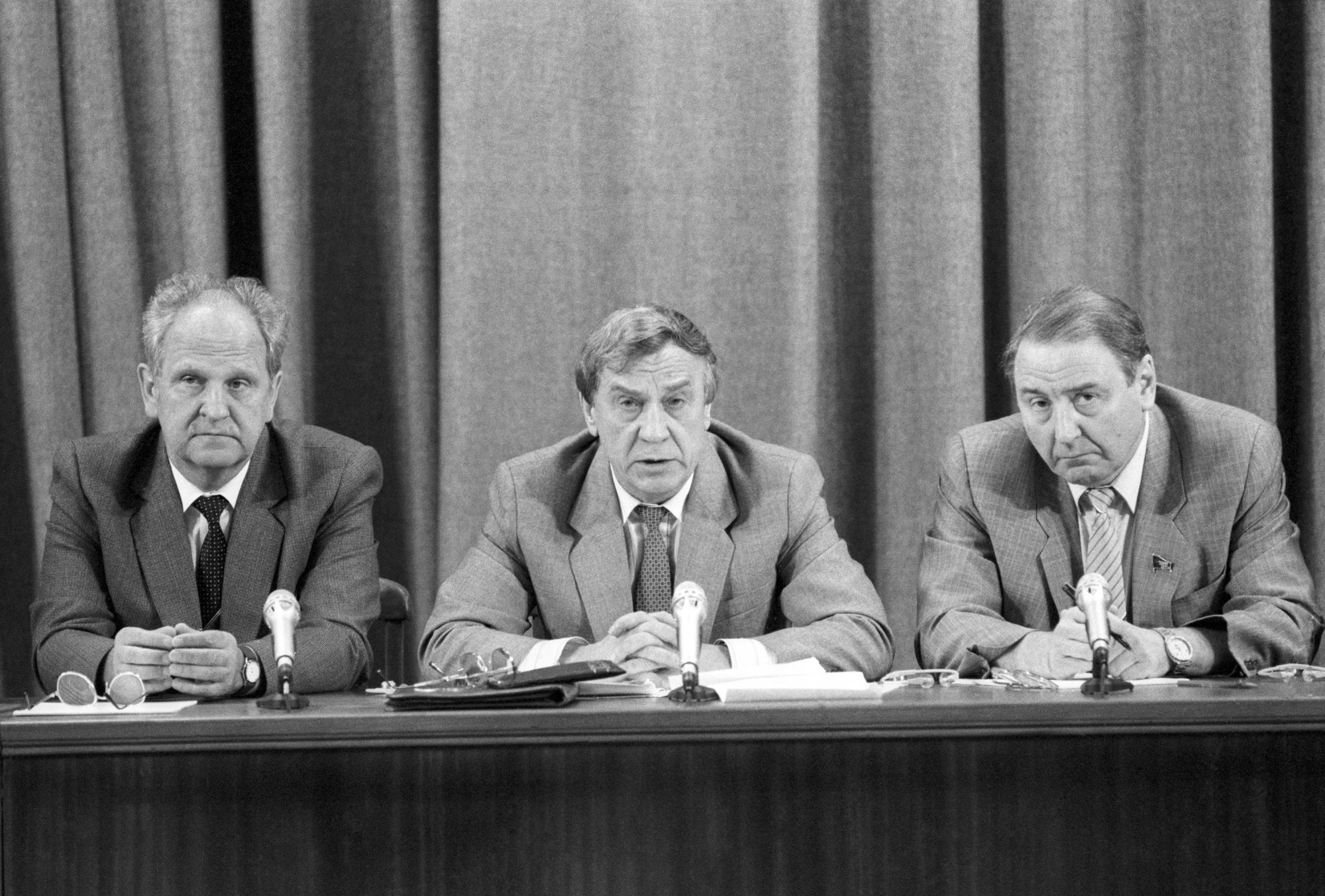
Troops, including tanks, were brought into Moscow. Resistance to the State Committee on the State of Emergency was led by the President of the RSFSR, Boris Yeltsin, and Russia’s leadership. Yeltsin’s Decree and an “Appeal to the citizens of Russia” were made public, in which the creation of the committee was described as a coup, and its members were declared state criminals. The country’s citizens were called upon to give a достойный response to the plotters and to demand that the country be returned to normal constitutional development.
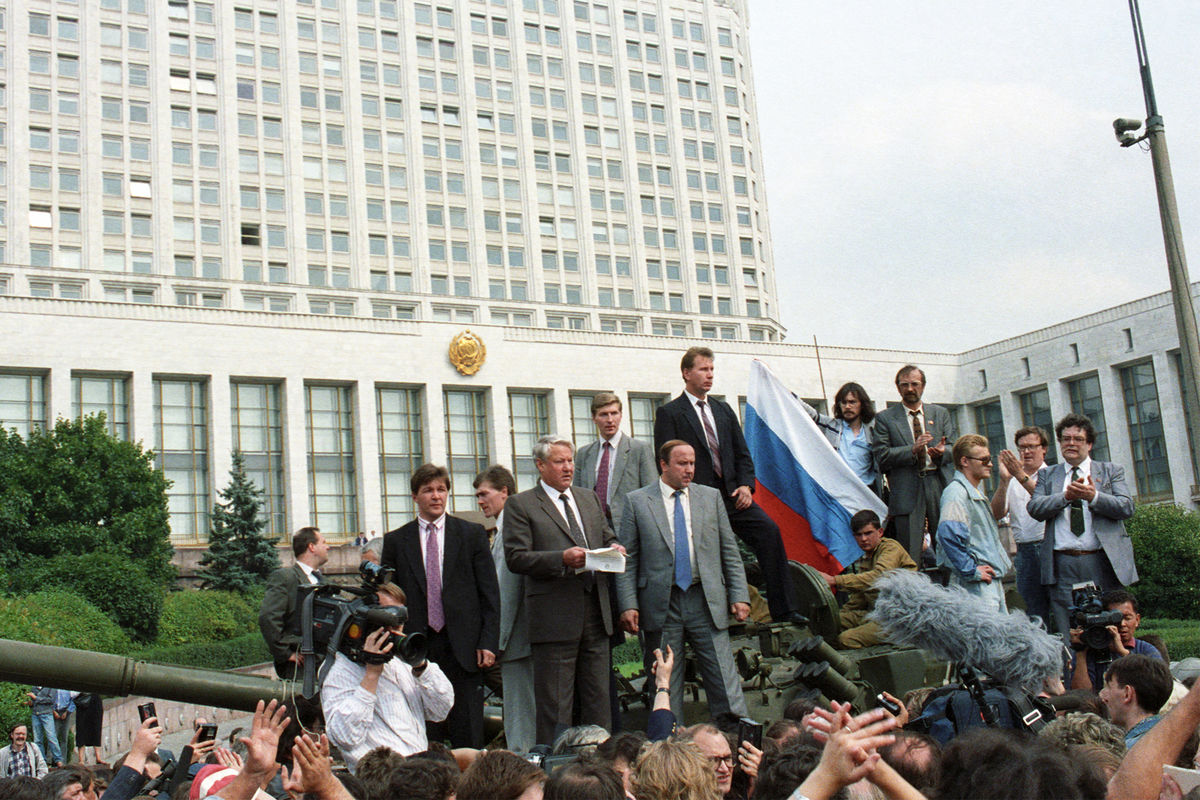
The center of resistance to the committee’s actions became the House of Soviets of the RSFSR (the White House), where volunteer detachments of defenders gathered to protect the building from a possible assault by government troops. The mass public unrest that began in Moscow during this period, as well as the defection of some military units to the side of the Russian government, led to the rapid defeat of the committee; its members surrendered and were arrested.
August 22 — an extraordinary session of the Supreme Soviet of the RSFSR ruled that the red-blue-white flag (the tricolor) should be considered Russia’s official symbol.
December 8 — in Belovezhskaya Pushcha, an agreement was signed on the dissolution of the USSR and the creation of the CIS.
December 25 — Mikhail Sergeyevich Gorbachev, in a televised address, announced his resignation from the post of President of the USSR.